Iran Proposes €50 Million Reward for Killing Trump...
.jpeg)
What is happening right now between Iran and the United States is something the world has not seen in a very long time, two countries locked in an active war, with one side's parliament now formally considering a law that would pay whoever kills the American president.
Iran's parliament is reviewing a bill that would require the government to pay €50 million, roughly $54 million, to any individual or group that kills US President Donald Trump. This is not a random threat from some fringe group. The man behind this proposal is Ebrahim Azizi, Chairman of the National Security and Foreign Policy Committee of Iran's Parliament, one of the most powerful positions in the Iranian legislature. He named the bill "Counter-Action by the Military and Security Forces of the Islamic Republic."
So why did this happen?
To understand this, you need to go back to February 28, 2026. The United States and Israel launched coordinated airstrikes on Iran, targeting military sites and assassinating several senior Iranian officials, including Supreme Leader Ali Khamenei himself, the most powerful man in Iran for over three decades. The strikes came while both sides were still in negotiations over Iran's nuclear programme.For Iran's political establishment, the killing of Khamenei was not just a military blow, it was a deeply personal wound. Ayatollahs Naser Makarem Shirazi and Hossein Noori Hamedani issued a religious fatwa calling vengeance against America the "religious duty of all Muslims." The parliamentary bounty bill is essentially the legislative version of that same rage.
Azizi stated that Trump, Israeli Prime Minister Netanyahu, and the Commander of US Central Command must all be targeted, citing their role in what he called the "assassination of Khamenei."
This is not Iran's first attempt
What makes this moment more alarming is the documented history that comes before it. This is not the first time Iran has tried to act on these threats. In July 2024, a man named Asif Merchant — with direct links to Iran's Islamic Revolutionary Guard Corps, was arrested for recruiting people to kill Trump. On March 6, 2026, just weeks before this bill was introduced, Merchant was convicted in New York of murder for hire.US Attorney General Pamela Bondi said at the time of conviction: "This man landed on American soil hoping to kill President Trump, instead, he was met with the might of American law enforcement."
In other words, Iran moving from covert assassination plots to an open parliamentary bill is an escalation in both boldness and desperation.
What does international law say?
Simply put, this violates it. The United Nations Charter prohibits any state from threatening or facilitating the killing of another country's head of state. A law that pays someone to do exactly that is not a grey area. The proposal has not been passed into law yet and remains under parliamentary review, but the moment it is, Iran would be in open breach of multiple international legal frameworks.
Ceasefire talks between Washington and Tehran are already at a deadlock, with both sides calling each other's proposals unacceptable. This bill, if passed, would shut that door entirely. For India and other countries dependent on Middle East oil and the Strait of Hormuz for trade, a deepening of this conflict carries direct economic consequences, from rising fuel prices to disrupted shipping routes.
The world is watching a conflict that started with airstrikes and is now being fought in parliamentary chambers as well. And the stakes, as this bill makes clear, could not be higher.


Share Your Comments
Related Posts

NEET-UG 2026 Re-Exam Set for June 21 - CBI Arrests Five in Paper Leak Case
The Rajasthan Special Operations Group found a set of over 400 questions circulating before the exam
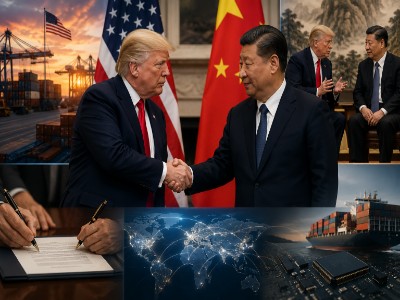
Trump and Xi Meet Here Is What Changed, What Was Agreed, and Why It Matters...
Trump's tariffs on China sparked a tit-for-tat trade war, leading both countries to raise tariffs on each other's goods to over 100 percent
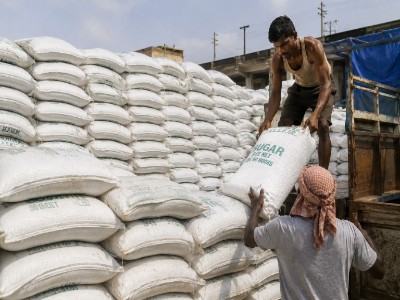
India Bans Sugar Exports Until September 2026 Here Is What Happened and Why It Matters...
Sugar that was leaving Indian ports and going to other countries has now been stopped. Not slowed down, not reduced, stopped entirely, at least until the end of this sugar marketing season in September.