India Brings Back the Lost Mughal Sarais...
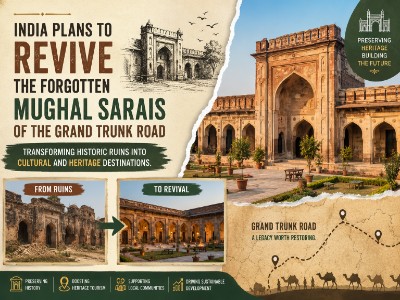
Fifty years ago today, a quiet but significant announcement was made that promised to breathe new life into some of India’s most neglected historical treasures.
Written by Deepak Sharma, Delhi, Published by Deepak Sriram, 19 May 2026, Tuesday, 6:00 PM IST
If you have ever driven along the old Grand Trunk Road, the ancient highway that once connected Delhi all the way to Lahore and Peshawar, you may have noticed crumbling stone structures standing silently by the roadside, half-swallowed by weeds and time. Most people drive past without a second glance. But these are no ordinary ruins. These are Mughal sarais, the wayside inns that once stood at the very heart of one of the greatest empires the world has ever seen.
Back on May 18, 1976, the government announced plans to restore these Mughal period sarais along the historic Jarnaili Road, the very route that connected Delhi with Lahore and Peshawar and convert them into proper tourist havens. It was a decision long overdue, and one that carried enormous historical weight.
So what exactly were these sarais, and why did they matter so much?
Think of them as the highway dhabas and rest houses of medieval India but far grander. Sarais were large enclosures that provided boarding, stabling for horses, fodder, and other facilities to travellers. While smaller ones in villages were modest, the ones along major routes could be grand and palatial, accommodating thousands of people and their horses. They were not just places to sleep, they were buzzing centres of trade, gossip, music, and culture. Merchants from Central Asia, pilgrims, royal messengers, soldiers, and common people all passed through the same gates and shared the same courtyards. In many ways, the sarai was where India truly came alive.
It was Sher Shah Suri who first institutionalised this practice in the 16th century, building sarais at regular intervals along what he called "Sadak-e-Azam." The Mughals later expanded this network, with Emperor Jahangir ordering that all sarais be built with burnt brick and stone. Over centuries, hundreds of these magnificent structures lined the Grand Trunk Road, making long-distance travel safe, affordable, and dignified for ordinary people.
Then came centuries of neglect.
After the decline of the Mughal Empire, and especially after 1947 when the Partition divided the subcontinent, these sarais lost their purpose almost overnight. The road to Lahore and Peshawar was suddenly a road to nowhere. The sarais were abandoned, encroached upon, and slowly reduced to rubble. Nobody thought to protect them. Nobody thought they were worth preserving.
That is what made the 1976 announcement so significant. For the first time, there was official recognition that these structures deserved to be saved, not just as museum pieces, but as living, functioning spaces for modern tourists.
What could this restoration actually achieve?
Restored sarais along the Grand Trunk Road corridor could become unique heritage tourism destinations, the kind that foreign and domestic tourists alike would travel miles to experience. Imagine staying overnight in a 400-year-old Mughal inn, walking through the same archways that Mughal emperors and their armies once passed through, that is an experience no five-star hotel can replicate.
Beyond tourism, it would mean protecting a shared cultural memory that belongs to all of South Asia. Sarais were defined by their markets and baths, and were hubs of public life where elites and common people interacted side by side. Restoring them is not just about bricks and mortar, it is about reclaiming a piece of our collective identity.India has no shortage of grand monuments that receive attention and funding. But the humble sarai, the place where ordinary life of the Mughal era actually unfolded, has waited long enough. Fifty years ago, someone finally said it was time. The question is whether we are still listening.

_1200x675.jpeg)

Share Your Comments
Related Posts
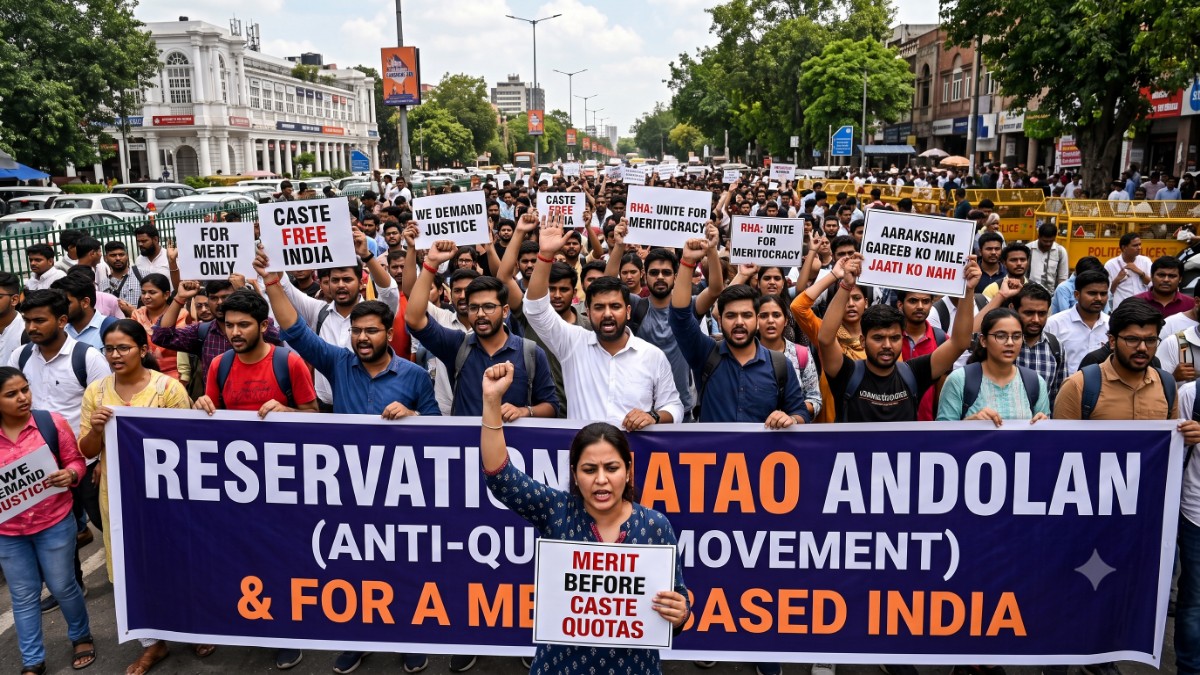
Reservation Hatao Andolan: Why India's Anti-Quota Movement Is Exploding
What started as an online campaign quickly evolved into physical demonstrations in Nagpur, Lucknow, Jaipur..

The Great Job Market Split- 90,000 Tech Jobs Lost: Is India Still a Talent Hub?
Why India saw 90,000 tech layoffs and record employability at the same time, and what it means for your career.

The 30 Lakh Crore Empire Just Lost Its Captain, And Nobody Knows Who's Next
N Chandrasekaran's exit as Tata Sons Chairman exposes a boardroom deadlock