India and Canada Launch Trade Forum — Economic Chapter of mutual Benefits...
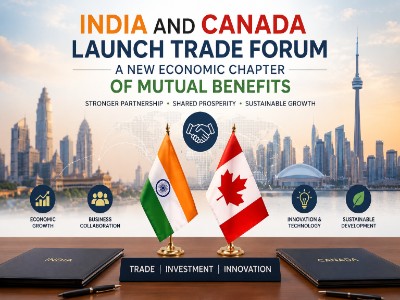
After almost three years of diplomatic tension and cold silence, India and Canada have formally taken steps to rebuild their economic relation and this time, with serious institutional intention. On Friday, the two countries launched the Canada-India Trade and Investment Forum, a dedicated platform that brings together business leaders of both nations to build commercial partnerships, explore joint investments, and keep trade conversations going beyond just government meetings. The announcement came after India's Commerce and Industry Minister Piyush Goyal completed a three-day visit to Canada from May 25 to 27, the largest-ever industry delegation India has sent to Canada.
Why Now?
The timing is crucial. India and Canada went through a serious diplomatic falling out in 2023, which had nearly finished bilateral trade progress. But the political winds shifted when Canadian Prime Minister Mark Carney took office and visited India in March 2026. That visit led to the signing of the Terms of Reference for a Comprehensive Economic Partnership Agreement, known as CEPA, on March 2, 2026, with both Prime Ministers Modi and Carney present at Hyderabad House in New Delhi.
Both countries also found themselves under economic pressure from US tariff policies under President Trump, which made finding reliable, like-minded trading partners a priority for both New Delhi and Ottawa. In simple words, the world pushed them closer, and leadership on both sides chose to act on it.
What Was Announced?
The Canada-India Trade and Investment Forum is now a formal, ongoing platform, not a one-time meeting. It will regularly connect Indian and Canadian business leaders across six key sectors: clean energy, critical minerals, agri-food, advanced manufacturing, digital technologies, and skills development. Beyond the forum, Indian and Canadian governments are actively negotiating CEPA, a comprehensive trade treaty that covers tariff reductions, services trade, investment rules, intellectual property, professional mobility, and digital trade. Two rounds of formal negotiations have already been completed, with the latest held in New Delhi earlier this month. The target is to finalize the deal by November 2026, ahead of the G20 Leaders' Summit. Maninder Sidhu Minister of Canada also confirmed that a "Team Canada Trade Mission", a large delegation of Canadian businesses will visit India later this year.
What Does This Mean for India?
The numbers tell the story clearly. Bilateral merchandise trade between India and Canada currently stands at USD 8.66 billion for FY 2024-25. India exports pharmaceuticals, steel, seafood, garments, and electronics to Canada, while importing pulses, coal, fertilizers, and petroleum. The stated target is to take this to USD 50 billion by 2030. If CEPA is concluded, independent estimates suggest it could boost bilateral trade by USD 4.4 to 6.5 billion and generate a GDP gain of USD 3.8 to 5.9 billion for Canada by 2035, which in turn creates larger market access and investment flows for Indian businesses.
Canada`s FDI into India has already reached USD 4.33 billion between 2000 and 2025. With the new forum and a formal trade agreement in the pipeline, that number is expected to grow particularly in clean energy, critical minerals, and digital infrastructure, sectors where India has robuts expansion plans. For the ordinary Indian reader, this translates to more foreign investment coming in, more export opportunities for Indian manufacturers and pharmaceutical companies, and a more stable long-term economic partnership with one of the world's affluent economies one that is also home to over 1.8 million members of the Indian diaspora.
This is not just a trade deal. It is a reset and both countries appear committed to making it last.

_400x300.jpeg)

Share Your Comments
Related Posts
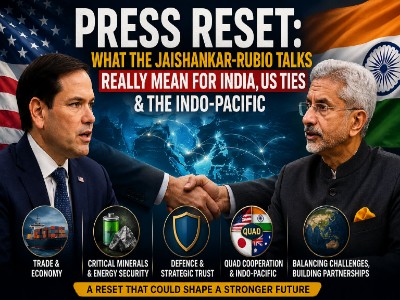
India and the US Press Reset- What the Jaishankar-Rubio Talks Really Mean for India...
The biggest takeaway for the average Indian, whether a business owner, a student planning to go abroad, or a professional in the IT sector is the trade deal. Marco said at the joint press conference that the pending India-US trade deal is on the "verge" of happening

Why Elite Communication Skills Matter More Than Ever in 2026
Body Language - Project Positive Body Language: Legendary psychologist Albert Mehrabian famously noted that a staggering 93% of communication is non-verbal.
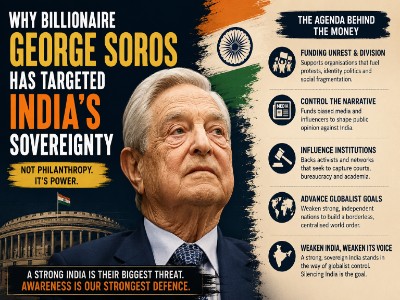
George Soros and His 5 Propaganda Campaigns Against India — Why India Must Stay Alert...
The Guardian is a partner of Project Syndicate, a network of over 500 media outlets across 156 countries, primarily funded by George Soros