Jharkhand's Students Are Camping In The Rain And Refusing To Back Down
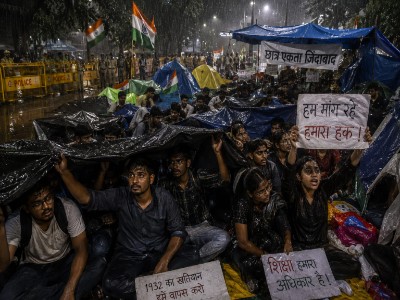
For nine days now, thousands of young job aspirants have been sleeping under makeshift tents at Ranchi's Jaipal Singh Munda Stadium, braving heavy monsoon rain, just to be heard. What started as a protest by a few hundred students has swelled into one of Jharkhand's biggest youth movements in recent memory, and at its heart lies a question that resonates with millions of Indian families: can you trust the exam that decides your child's future?
What exactly is going on
The trouble began around the 14th Jharkhand Public Service Commission Combined Civil Services Preliminary Examination, held on April 19 this year. Soon after, serious allegations surfaced that the exam had been compromised, with candidates claiming that OMR answer sheets had been leaked and that the entire recruitment process had been tainted by malpractice. This wasn't an isolated complaint either. Similar concerns have dogged the Jharkhand Staff Selection Commission, the sister recruitment body, over a separate exam called the Jharkhand General Graduate Level Combined Competitive Examination, in which over 3 lakh candidates had appeared.
Since July 29, students from all 24 districts of Jharkhand have been gathering at the stadium in Ranchi, with organisers saying the crowd swells into the thousands every evening as more aspirants arrive. They've marched through the city to Albert Ekka Chowk, raised slogans demanding accountability, and set up what's essentially a small protest township, complete with food, bedding, and supplies being sent in from supporters as far away as Punjab, Delhi, and Uttar Pradesh. The scene has drawn comparisons to the student protests seen earlier at Delhi's Jantar Mantar over similar exam integrity issues.
Why are students so angry?
Their core demand is straightforward: cancel the tainted JPSC exam entirely, and hand the investigation over to the Central Bureau of Investigation rather than the state's own Criminal Investigation Department. Students say they've simply lost faith in a state-led probe, arguing that Jharkhand's recruitment exams have a long, troubled history of scams stretching back roughly a quarter of a century, ever since the JPSC was established in 2000. They point out that past controversies were investigated before, yet accountability rarely followed, and they don't want history repeating itself.
There's substance behind the anger too. The state's CID investigation has already led to arrests, including individuals connected to TDPL, a private agency that was handling exams for the JSSC and has since been blacklisted by the state government. The probe reportedly reached all the way to the top, with the former JPSC chairman and ex-Chief Secretary of Jharkhand, L Khiyangte, questioned extensively before eventually resigning from his post. Separately, eight people, including five jawans from the Indian Reserve Battalion, were arrested in connection with an earlier alleged paper leak from a JSSC exam held last year.
The political angle
As with most large protests in India, politics has entered the picture. Jharkhand Loktantrik Krantikari Morcha leader Devendra Nath Mahato has gone on an indefinite hunger strike in solidarity with the protesting students, adding pressure on the state government. Opposition BJP leaders, including Jharkhand BJP president Aditya Sahu, have raised the issue in Parliament, demanding a CBI probe and criticising the Hemant Soren-led government's handling of the matter, particularly noting that the Education portfolio itself is held by the Chief Minister. The state government, for its part, has pointed to the CID probe already underway as evidence that it's taking the allegations seriously, though students remain unconvinced that this goes far enough.
Why should this matter beyond Jharkhand?
This story taps into something far bigger than one state's exam controversy. Government job exams in India are often the single most important shot at economic mobility for lakhs of young people, especially in states like Jharkhand where private sector opportunities remain limited. Families frequently save for years, and students dedicate their most productive early adult years, all riding on the promise that these exams are fair. When that trust breaks down, through leaks, irregular OMR sheets, or opaque cut-off publishing, it doesn't just anger a few thousand protestors, it chips away at young people's faith in the entire public institution meant to reward merit.
This also isn't happening in isolation. Similar paper leak controversies have rocked recruitment exams in states like Rajasthan and Bihar, and even national-level exams like NEET, in recent years, making exam integrity a genuinely national conversation among India's youth.
What happens next
For now, the protest shows no signs of slowing down. Students have warned they'll escalate further, including marching to the Jharkhand Assembly, if their demands aren't met. Whether the state government eventually agrees to a central investigation, or manages to convince protestors that its own CID probe can deliver real accountability, will likely determine how this standoff, and the trust of an entire generation of Jharkhand's youth, resolves in the weeks ahead.



Share Your Comments
Related Posts
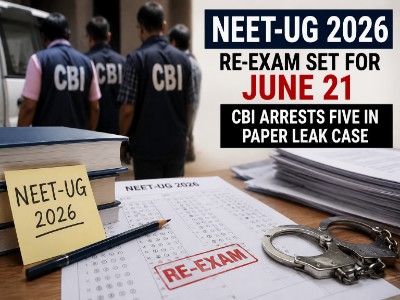
NEET-UG 2026 Re-Exam Set for June 21 - CBI Arrests Five in Paper Leak Case
The Rajasthan Special Operations Group found a set of over 400 questions circulating before the exam