The New Face Of An Old Fight- Why Reservation Hatao Is Trending Again
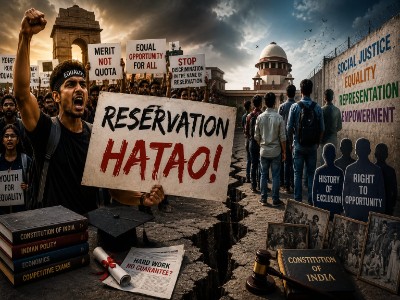
Just weeks after India's youth stunned the political establishment with the CJP-led protests that forced a Union minister's resignation, a new and considerably more divisive movement has taken shape on the very same streets and the very same social media platforms. This time, the target isn't exam integrity, it's India's decades-old, constitutionally protected reservation system, and the debate it's reignited cuts right to the heart of how India defines fairness.
How this movement started
The current wave traces back to late July 2026, gathering momentum in the immediate aftermath of the Cockroach Janta Party protests that dominated headlines through June and July. One of its more visible faces is Harsh Dubey, who gained public attention after a TV debate on the NEET paper leak controversy and has since built a large social media following while seeking permission to protest at Delhi's Jantar Mantar. The bigger driving force, though, is Reservation Hatao Andolan, or RHA, an Instagram-based platform that describes itself as a citizen-led movement with no political party affiliation. It crossed 5.5 million followers within days of gaining traction and held its first physical demonstration in Nagpur on July 30, marching from Zero Mile Square to Samvidhan Square, deliberately drawing parallels to how the CJP movement evolved from an online campaign into real street mobilisation. Protests linked to this broader sentiment have since been reported in Lucknow, Jaipur, and Visakhapatnam as well, with groups like Savarna Morcha and Swarn Samaj demanding the withdrawal of UGC equity regulations and an end to caste-based reservation entirely.
What the movement is actually demanding
At its core, the campaign wants India's reservation system, currently based primarily on caste, restructured around economic status instead. Supporters argue that decades after independence, using caste alone as the determining factor for quotas in education and government jobs no longer reflects who genuinely needs support, and that economically disadvantaged individuals from all communities, including upper castes, are being unfairly excluded from opportunities purely because of their birth category. It's worth noting this isn't a single, unified organisation with one clear leadership structure, it's a loose coalition of different online personalities, community groups, and local demonstrations pursuing related but not always identical goals.
This isn't India's first anti-reservation moment, not by a long shot
To understand why this issue provokes such intense reaction, it helps to look back. India has seen major anti-reservation flashpoints before, most notably the 1990 protests against the Mandal Commission's recommendation to extend quotas to Other Backward Classes, which included the deeply painful self-immolation of student Rajiv Goswami, and the 2006 protests when the government proposed extending 27 percent OBC reservation to elite institutions like the IITs and AIIMS, sparking mass walkouts, hunger strikes, and the formation of the group Youth for Equality. Each time, the pattern has looked broadly similar, general category students and professionals arguing merit was being compromised, while reservation supporters have insisted these quotas remain a necessary, constitutionally guaranteed correction for centuries of documented social exclusion.
The other side of this argument
It would be incomplete to present only the anti-reservation case. Supporters of the existing caste-based system point out that reservation was never designed merely as a poverty-alleviation tool, it was built specifically to address caste-based social exclusion, a distinct and historically documented form of discrimination that economic status alone doesn't capture or correct. Critics of the anti-reservation movement, including some academic commentators, have gone further, arguing that this current wave and similar past mobilisations, such as movements around the Maratha and Jat reservation demands, actually reflect privileged communities increasingly seeking reservation benefits for themselves once they realised the political power of the demand, rather than genuinely opposing the concept of reservation itself. They point to India's existing 10 percent Economically Weaker Section quota, introduced in 2019, as evidence that economic criteria already coexist alongside caste-based reservation, rather than being genuinely absent from the system.
Why this matters, and why it's genuinely complicated
Reservation remains one of India's most emotionally charged policy debates precisely because it sits at the intersection of two things people care about deeply, fairness in opportunity and acknowledgment of historical injustice, and reasonable people land on very different sides of where that balance should sit. What makes the current movement notable isn't necessarily its policy demands, which echo decades-old arguments, but its speed and format, following almost the exact digital-to-street playbook that made the CJP protests so effective just weeks earlier.
Whether Reservation Hatao Andolan evolves into a sustained, organised political force or fades as a viral moment will likely depend on leadership, government response, and how effectively it can build support beyond the demographic groups already sympathetic to its cause, a threshold India's reservation debate has repeatedly tested, and rarely resolved, for over three decades.

_1200x675.jpeg)

Share Your Comments
Related Posts
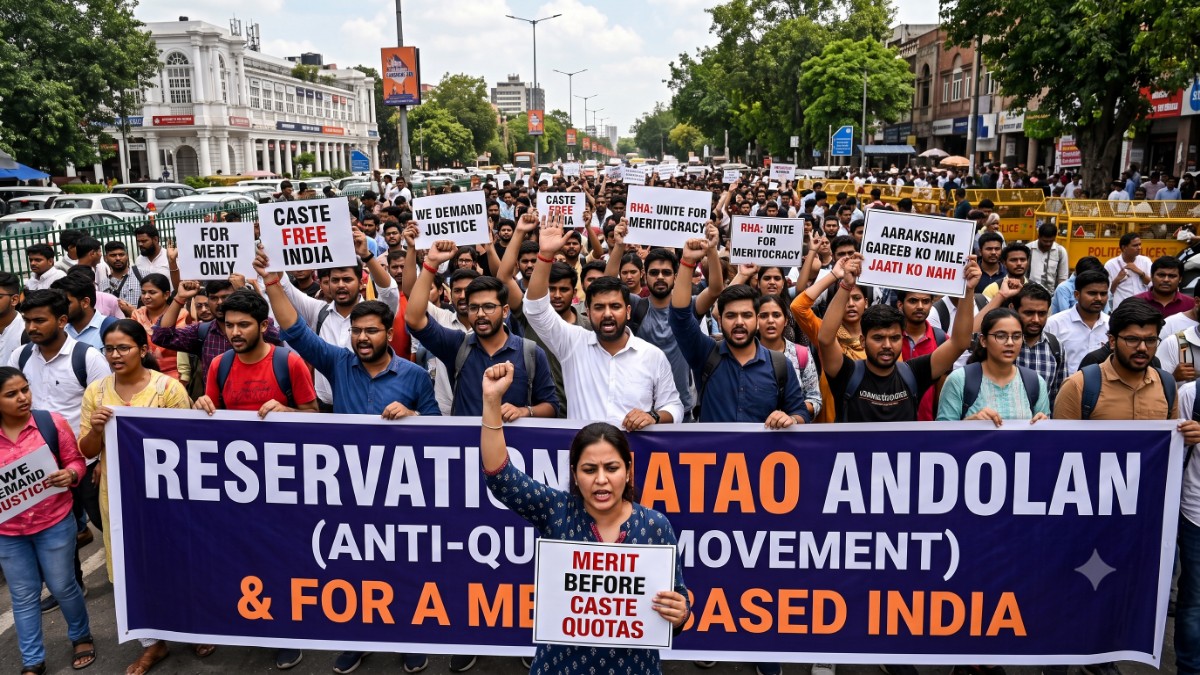
Reservation Hatao Andolan: Why India's Anti-Quota Movement Is Exploding
What started as an online campaign quickly evolved into physical demonstrations in Nagpur, Lucknow, Jaipur..
The Great Job Market Split- 90,000 Tech Jobs Lost: Is India Still a Talent Hub?
Why India saw 90,000 tech layoffs and record employability at the same time, and what it means for your career.
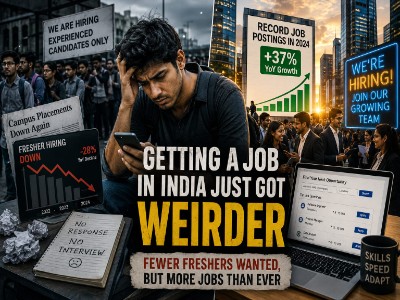
Getting A Job In India Just Got Weirder- Fewer Freshers Wanted, But More Jobs Than Ever
Why India's job market is growing overall even as entry-level opportunities shrink, and what skills-first hiring means for freshers.