The Woman Who Refused Food For 16 Years
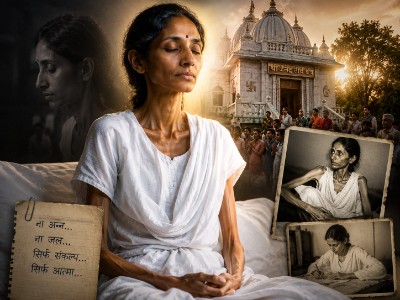
Imagine going without a single morsel of food, without even a drop of water on your own, for sixteen years straight. It sounds almost impossible to believe, yet that's exactly what a young woman from Manipur did, turning her own body into a weapon of peaceful protest against a law she believed was destroying her homeland. Her name is Irom Chanu Sharmila, and her story remains the longest recorded hunger strike by any individual in world history.
The night that changed everything
To understand why Sharmila did what she did, you have to go back to November 2, 2000, to a small town called Malom in Manipur. On that evening, personnel from the Assam Rifles, a paramilitary force stationed in the region, opened fire near a bus stop. Ten ordinary civilians, people simply waiting to travel home, were shot dead. Among them was a 62-year-old woman and an 18-year-old National Bravery Award winner. There was no battle, no confrontation, no warning. It was, in the eyes of most people who heard about it, a massacre of innocent bystanders.
This incident became known as the Malom Massacre, and it broke something in Sharmila. Two days later, on November 4, 2000, this 28-year-old poet and civil rights worker sat down and made a decision that would define the rest of her life. She would refuse food and water until the law that gave soldiers the power to kill without consequence was repealed.
What exactly was she fighting against
The law in question is called the Armed Forces Special Powers Act, or AFSPA, first introduced way back in 1958. In regions declared "disturbed areas," which included large parts of Manipur and other northeastern states, this law gives the armed forces sweeping authority. Soldiers can open fire, even causing death, against anyone they suspect is acting against the law or carrying weapons, and crucially, they enjoy near-complete legal immunity for those actions. No arrest can happen without permission from the central government. For families in Manipur, this law had come to represent decades of extrajudicial killings, custodial torture, and cases of people simply disappearing, never to be found again.
Sharmila's demand was simple on paper but nearly impossible in practice: scrap AFSPA entirely.
Sixteen years of being force-fed through her nose
Because refusing food and water is technically classified as attempting suicide under Indian law, authorities arrested Sharmila almost immediately. She was kept in a special guarded room inside a hospital in Imphal and force-fed through a tube inserted into her nose, day after day, year after year. Since Indian law only permits detention on this specific charge for one year at a stretch, she was released annually, only to be re-arrested within days because she would immediately resume her fast the moment she stepped outside.
Her protest slowly grew beyond Manipur's borders. Human rights organisations, including Amnesty International and the Asian Human Rights Commission, took notice. Her case was even raised at the United Nations Human Rights Council. In 2004, twelve women in Manipur staged a shocking, unforgettable protest of their own outside an army base, inspired by the same anger Sharmila carried, after the alleged custodial rape and murder of a woman named Thangjam Manorama.
How her fight ended, and what actually happened
In 2016, after sixteen long years, Sharmila made a decision that surprised many. She chose to end her hunger strike, saying honestly that her fast wasn't producing the results she had hoped for and that she wanted to try a different path, one through democratic politics. She contested Manipur's 2017 state assembly elections as an independent candidate. She lost badly, securing only a handful of votes, a bitter and humbling result after everything she'd sacrificed.
Did her sacrifice actually change anything?
Here's the honest, complicated truth: AFSPA was withdrawn from certain areas, including Imphal municipality, but it continues to be enforced in Manipur's hill districts and several other northeastern states even today, periodically extended every six months by the government based on the security situation on the ground. So in the strictest sense, her core demand was never fully met.
But her legacy runs deeper than legislation. Sharmila, still remembered as the "Iron Lady of Manipur," forced a national conversation about military accountability, human rights, and how far a government should be allowed to go in the name of security. Her sixteen years remind us that some battles aren't won through a single law being scrapped, but through the questions they leave permanently etched into a nation's conscience, questions India is, in many ways, still answering.