The ₹30 Lakh Crore Question: Will Your UPI Payments Ever Cost You Money?
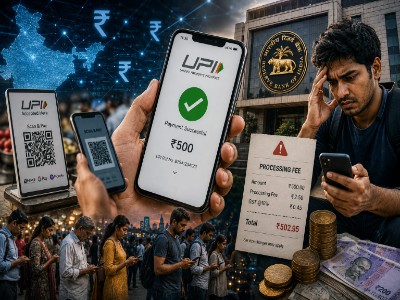
For years, tapping "Pay" on Google Pay or PhonePe has felt like the one truly free lunch in Indian banking, no fees, no fine print, just instant money transfer. That sense of security got a genuine jolt this week when Parliament passed a bill that touches the very framework governing UPI charges, sending WhatsApp forwards flying and forcing Finance Minister Nirmala Sitharaman to personally step in and calm nerves.
What actually happened in Parliament
On August 10, the Rajya Sabha passed the Taxation and Other Laws (Amendment) Bill, 2026, after it had already cleared the Lok Sabha the previous week. The bill amends Section 10A of the Payment and Settlement Systems Act, 2007, the very provision that has kept UPI and RuPay transactions completely free of Merchant Discount Rate, or MDR, since 2020. Understandably, the moment word spread that this foundational "zero-MDR" law was being touched, speculation exploded that the government was quietly preparing to start charging ordinary users for using UPI.
Sitharaman moved quickly to shut that down. She clarified in Parliament, and separately on social media, that the bill itself does not impose any new charge on consumers, it simply creates a legal framework that allows a body called the UPI and Services Steering Committee, headed by the National Payments Corporation of India, to decide on any future MDR, if one is ever introduced at all.
So what could actually change?
Here's where it gets more nuanced. The minister was clear that any future MDR being considered would apply only to a limited category of merchant transactions above a fairly high, still-undecided threshold, not to ordinary people transferring money to friends, paying a vegetable vendor, or splitting a dinner bill. All person-to-person UPI transfers will continue to be completely free, as will the vast majority of everyday, low-value merchant payments, the kind that make up the bulk of daily UPI usage across the country.
To put the scale of what's being discussed into context, Sitharaman pointed out that credit cards already attract an MDR of roughly 1.5 to 2 percent or more, and debit cards up to 0.90 percent, fees merchants pay to banks and card networks, largely invisible to shoppers because retailers absorb the cost rather than passing it on directly. She suggested that a similar, far more limited structure, applying only to large-ticket transactions from bigger merchants, could eventually help fund further innovation and infrastructure investment in the UPI ecosystem, and even cited Australia, Brazil, and China as examples of countries where some form of payment acceptance charge already exists within otherwise fast, modern payment systems.
Why is UPI's free model such a big deal to protect?
The numbers explain why this issue triggered such a strong reaction. UPI processed a staggering 2,366 crore transactions worth nearly ₹30 lakh crore in July 2026 alone, and the platform is now live in 11 countries, having become one of India's most celebrated digital public infrastructure success stories globally. Since its zero-MDR structure was introduced in 2020 specifically to accelerate India's shift away from cash, any hint of that changing understandably touches a nerve, especially for the small shopkeepers, auto drivers, and street vendors who adopted UPI precisely because it cost them nothing.
There's also a geopolitical layer worth knowing about. This debate resurfaced partly against the backdrop of a March 2026 US Trade Representative report examining foreign digital payment practices, and industry bodies like the Payments Council of India were quick to clarify that any merchant service charges are simply commercial arrangements between merchants and payment providers, not a signal that ordinary consumers would ever be asked to pay.
What should you actually take away from this?
For the average Indian using UPI to pay for chai, groceries, or splitting rent with flatmates, nothing changes right now, and the government has been fairly explicit that nothing is likely to change for the overwhelming majority of everyday transactions going forward either. What this bill really does is quietly hand the government legal tools it didn't clearly have before, tools that could, at some undetermined future point, allow a very narrow slice of high-value merchant transactions to carry a small fee, similar to how card payments already work today. Whether that actually happens, and what threshold eventually gets set, remains genuinely undecided, and worth watching closely, but for now, your everyday UPI habit, splitting an auto fare, buying vegetables, sending money to a friend, remains exactly as free as it's always been.
_1200x675.jpeg)