India Puts New Export Tax on Petrol-Eases Duty on Diesel and ATF...
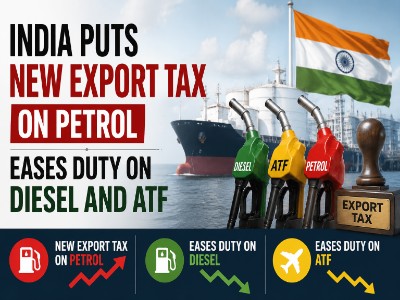
If you have been keeping an eye on fuel prices lately, here is some important news straight from North Block. The Finance Ministry has revised export taxes on petroleum products with effect from May 16, 2026. In plain terms, the government has imposed a windfall gains tax of Rs 3 per litre on the export of petrol for the first time, while simultaneously reducing the levy on diesel exports to Rs 16.50 per litre and on aviation turbine fuel (ATF) to Rs 16 per litre. And before you panic at the pump, there is no change in the existing excise duty rates on petrol and diesel for domestic consumption. So your daily fuel bill stays the same, at least for now.
Written by Dharam Pal publlshed by Deepak Sriram
But Why Is This Happening at All?
To understand this, you need to look at what has been going on in West Asia. On February 28, the United States and Israel launched military strikes against Iran, triggering sweeping retaliation from Tehran. That single event sent shockwaves across global energy markets. Crude oil prices have remained above USD 100 per barrel over the past week, up sharply from about USD 73 per barrel before the war began.
When global crude prices shoot up like this, Indian oil refineries, many of which are private players, suddenly find it far more profitable to export refined fuel abroad rather than sell it domestically at regulated prices. This creates a dangerous situation where petrol and diesel could quietly disappear from local markets as refiners chase higher international prices. The windfall tax was levied to ensure domestic availability of petroleum products by disincentivising exports in the backdrop of the West Asia crisis, and also to restrain exporters from taking undue advantage of the price differences caused by the war.
How Did We Get Here? A Timeline
This is not the first time the government has acted. Export levies on petrol, diesel, and ATF were introduced from March 27, 2026, to ensure domestic availability of petroleum products amid the West Asia crisis, with rates reviewed on a fortnightly basis linked to average international prices of crude oil and refined products.
Export duty on diesel was first set at Rs 21.50 per litre on March 26, then sharply raised to Rs 55.50 per litre on April 11 when the conflict escalated. It was later cut to Rs 23 per litre on April 30, and has now been further reduced to Rs 16.50 per litre as global prices show some signs of cooling. ATF followed a very similar up-and-down journey. The Special Additional Excise Duty (SAED) on petrol at Rs 3 per litre has now been imposed for the first time since the start of the West Asia crisis, which signals that the government has noticed refiners beginning to divert petrol exports as well.
What Does This Mean Going Forward?
The reduction in diesel and ATF export duties suggests that the government believes the supply crunch for these fuels is easing somewhat. Lower export taxes mean refiners can export more freely, which could slightly improve their earnings and keep refinery operations running at full capacity, which ultimately benefits domestic supply too.
The new levy on petrol exports, however, is a clear warning shot. It tells refiners: do not start diverting petrol abroad at India's expense.
For the common Indian, the autorickshaw driver, the truck owner, the airline passenger the immediate impact is reassuring. Fuel prices at the pump are unchanged. The government is essentially managing the situation quietly behind the scenes, using tax policy as a tool to keep your local petrol station stocked, even as a war rages thousands of kilometres away and global oil markets stay on edge.

_1200x675.jpeg)


Share Your Comments
Related Posts
Reservation Hatao Andolan: Why India's Anti-Quota Movement Is Exploding
What started as an online campaign quickly evolved into physical demonstrations in Nagpur, Lucknow, Jaipur..

The Great Job Market Split- 90,000 Tech Jobs Lost: Is India Still a Talent Hub?
Why India saw 90,000 tech layoffs and record employability at the same time, and what it means for your career.

Getting A Job In India Just Got Weirder- Fewer Freshers Wanted, But More Jobs Than Ever
Why India's job market is growing overall even as entry-level opportunities shrink, and what skills-first hiring means for freshers.