Pakistan Is Happier Than India?
_400x300_(1).jpeg)
When you search for the World Press Freedom Index, India`s neighbour Pakistan ranks 153rd where India ranks 157th. In the World Happiness rankings, Pakistan ranks 104th and India ranks 116th.
For the World Press Freedom Index, the factors considered include.
Legal Framework
Economic Context
Sociocultural Context
Security Indicator
हिंदी में पढ़ें: प्रेस फ्रीडम इंडेक्स में पाकिस्तान भारत से बेहतर?
For World Happiness Index the factors considered are.
GDP per capita
Social support
Healthy life expectancy
Freedom to make life choices
Generosity
Perceptions of corruption
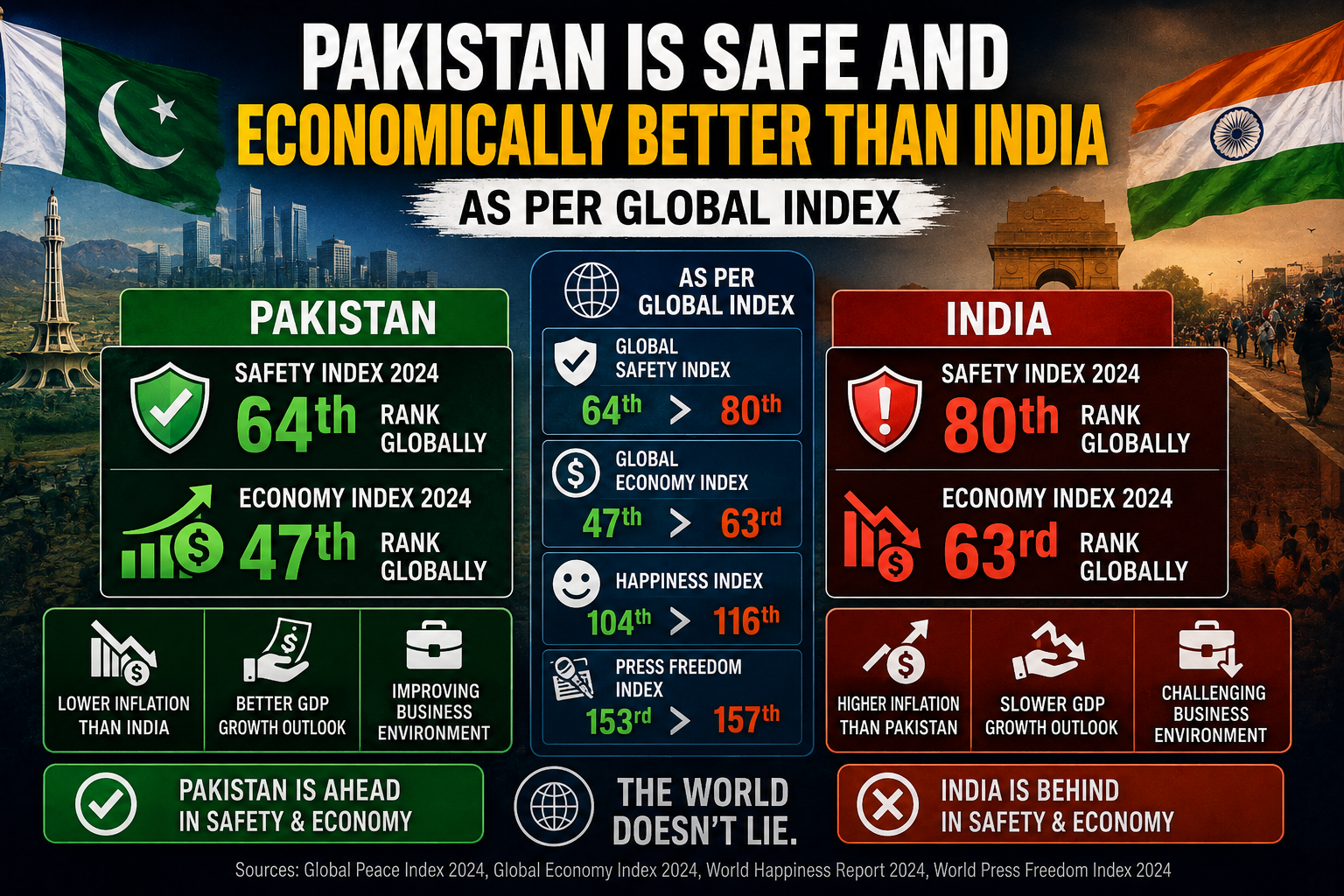
Do you really want to believe that a country facing civil unrest ranks higher than India on an international media or governance index? A nation under military influence scores better than the world’s largest democracy. A country criticized internationally for instability appears above India in measuring freedom, democracy, or public satisfaction.
That raises a legitimate question: are these global rankings always measuring what people assume they are measuring?
A recent discussion in Indian media revisited an issue that rarely receives deeper scrutiny—not whether India should be criticized or praised, but whether global indexes themselves deserve more questioning before being treated as objective truth.
The Indexes Everyone Quotes, But Rarely Questioned
Every year, headlines appear across newspapers and television channels.
India drops on the Press Freedom Index.
India declines on the Democracy Index.
India ranks lower than expected in global happiness reports.
These rankings are repeated so frequently that they begin to seem like the ultimate truth.
But critics of these indexes argue that the conversation often stops at the headline and rarely moves into methodology.
When countries dealing with military intervention, political instability, armed conflict, or severe institutional challenges rank above India on measures tied to freedom or democratic functioning, it naturally raises questions about how those measurements are designed and weighted.
This does not automatically invalidate the rankings.
But it does invite scrutiny.
The Press Freedom Question: What Exactly Is Being Measured?
Among all these rankings, media freedom indexes deserve especially careful examination because they strongly influence international perception.
Freedom of the press is unquestionably important in any democracy. Independent journalism, criticism of power, and media plurality remain essential democratic values.
But critics argue that measuring press freedom across countries is more complex than assigning a single rank.
Questions worth asking include:
What samples, surveys and yardsticks are used by the organizations that publish these indexes?
Is the index measuring legal protections or actual working conditions for journalists?
Does it account for the scale and diversity of large democracies?
How much weight is given to expert perception versus measurable outcomes?
Are local media ecosystems understood in their own context?
Can a country with thousands of publications and highly competitive news environments be fairly compared using the same template as much smaller states?
These questions become more relevant when rankings influence global narratives.
Why These Rankings Matter Beyond Headlines
These reports are not simply academic exercises.
Global media cites them.
Policy institutions reference them.
Investors use them as one among many signals when assessing political and institutional environments.
As a result, rankings can shape perception long before people engage directly with a country’s reality.
If a country is repeatedly described through a narrow set of international indexes, public understanding may become driven more by scorecards than lived complexity.
That creates a risk in both directions: criticism may become exaggerated, or genuine concerns may be dismissed too quickly.
Neither outcome is useful.
The Bigger Debate: Universal Standards or One Framework for Everyone?
A broader question of global rankings is that measurement frameworks may reflect assumptions developed in particular historical and political contexts. And the intentions behind these indexes matter the most. Large, multilingual, federal democracies operate differently from smaller or more centralized states.
That raises a critical but crucial question:
Can one global framework capture different political realities equally well?
Critics argue that universal benchmarks can become oversimplified if context disappears.
What Should Readers Do With These Reports?
A healthier approach may be:
Examine the organization that publishes these indexes
How fair and practical these indexes are on ground
Understand the pattern of ranking
Examine the methodology
Compare multiple indexes
Look at underlying indicators
Question whether outcomes match observable reality
Freedom of the press matters. Democratic performance matters.
But so does questioning how those ideas are defined, measured, and presented.
Global indexes should remain open to scrutiny—especially when they carry the power to shape narratives, influence perception, and frame how countries are understood around the world.
The goal should not be to defend or dismiss any country. The goal should be to ask whether the measurement itself deserves as much attention as the ranking.
_1200x675.jpeg)


Share Your Comments
Related Posts
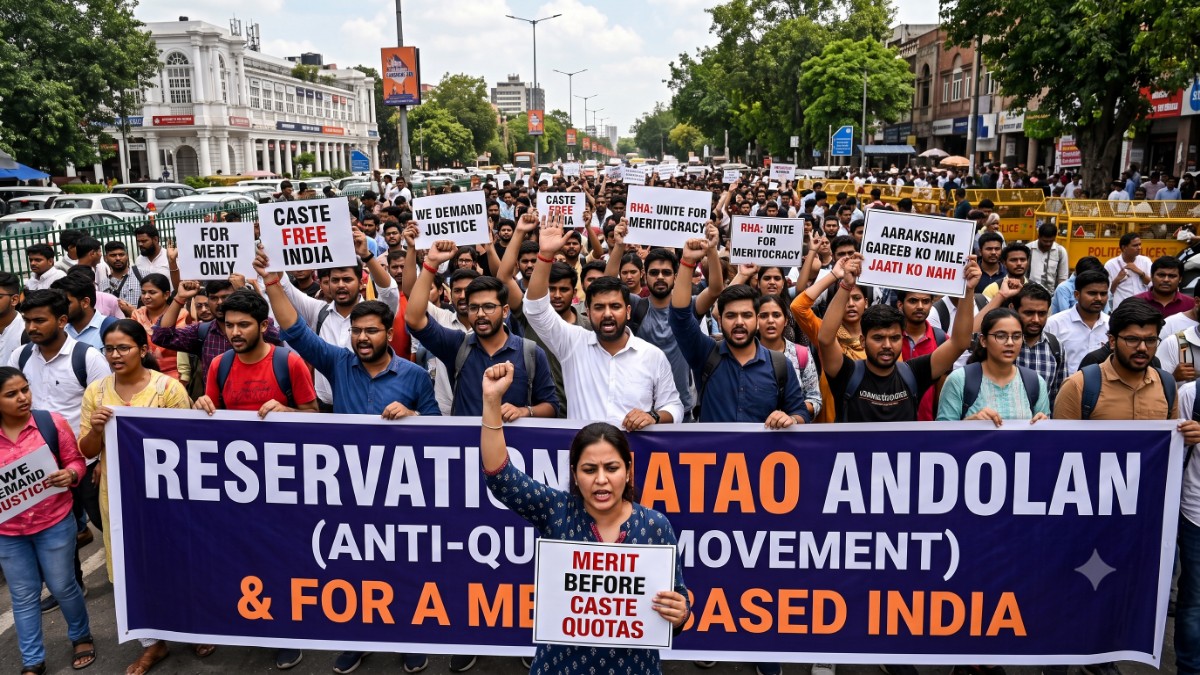
Reservation Hatao Andolan: Why India's Anti-Quota Movement Is Exploding
What started as an online campaign quickly evolved into physical demonstrations in Nagpur, Lucknow, Jaipur..
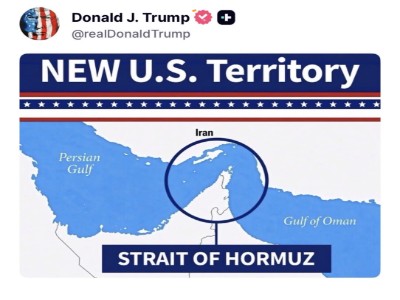
New U.S. Territory - Trump's Wildest Map Yet Just Rattled Global Oil Markets
Trump's bizarre claim over the Strait of Hormuz as "New U.S. Territory" has deepened tensions with Oman and...

The Waterway That Holds The World Hostage Might Finally Reopen
Iran and Oman are nearing a deal to reopen the Strait of Hormuz, offering a fragile but crucial reprieve for global oil markets.