Gauri Lankesh: Killed, Never Silenced...
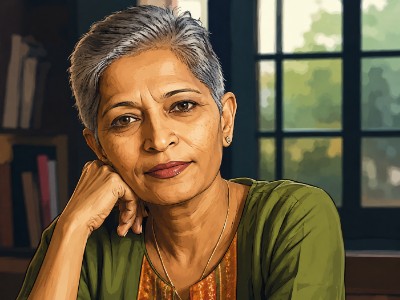
In India journalism is often called the fourth pillar of democracy because its role is to inform people and hold power accountable. However, concerns about biased and paid journalism have become part of public discussion in the country. Biased journalism happens when news coverage appears to favor a political group, business interest, ideology, or public figure instead of presenting information fairly. Critics argue that this can influence how people understand events and reduce trust in the media.
Paid journalism refers to situations where promotional content, political messaging, or sponsored influence may appear in a format that looks like independent news. When financial or political interests affect reporting without clear disclosure, people may find it difficult to separate information from promotion.
At the same time, Indian journalism is not one single voice. Many reporters and news organizations continue to do investigative work, report from difficult places, and question those in power.
The larger challenge is maintaining editorial independence, transparency, fact-checking, and public trust. A healthy democracy depends on citizens having access to accurate information and being able to hear different viewpoints before forming opinions.
But there was a time when some journalists were fearless and inspired to search the truth for the society. What happened on the night of 5 September 2017 in Rajarajeshwari Nagar, Bengaluru, shocked the whole country. A journalist was shot dead at her own doorstep — only because she wrote what she believed was true, asked difficult questions, and spoke for people whose voices were often ignored.
Gauri Lankesh — after that night, this name became a permanent part of discussions about Indian journalism and freedom of expression. She was not just a journalist — she became a symbol, a challenge to any system that does not want to hear different opinions.
Gauri Lankesh was born on 29 January 1962 in Bengaluru. Journalism already had a place in her family. Her father, P. Lankesh, was a well-known Kannada writer and journalist. He started a Kannada weekly magazine called Lankesh Patrike, which became popular in Karnataka for its bold and fearless writing.
From childhood, Gauri saw how writing could influence society.
After completing her studies at Bangalore University, she entered English journalism. She worked for English newspapers for some time, but she always felt connected to Kannada and the people among whom she grew up.
After her father passed away in 2000, she took charge of Lankesh Patrike. Later, she started her own publication called Gauri Lankesh Patrike.
Very soon, the magazine became popular among readers who wanted something different from mainstream journalism. Gauri had a unique writing style — direct, clear, and without avoiding difficult topics.
She openly wrote about communal politics, caste discrimination, violence against women, and misuse of power.
Her work related to the Naxal movement also became important. Gauri helped as a mediator in bringing some Naxal workers back into mainstream society. She believed problems should be solved through dialogue, not guns. This reflected her belief in understanding and supporting people living on the margins of society.
In her journalism, she rarely changed her views because of pressure. Her sharp criticism of right-wing groups led to defamation cases against her. In 2016, she was convicted in one such case, but she did not stop writing. Instead, she became even more outspoken.
People who tried to scare her may not have understood the determination she had inherited from her father.
On 5 September 2017, when she returned home in the evening, attackers waiting outside shot her.
The country was shocked.
The next day, journalists, writers, thinkers, and ordinary citizens came out onto the streets across India. The slogan “I am also Gauri” became a symbol of protest and resistance.
Later investigations suggested that the murder was part of a planned conspiracy. Several accused people were arrested, and the case remains under trial.
But her death left behind a bigger question:
Can a journalist in this country feel safe while writing the truth?
During her life, Gauri Lankesh received many awards and recognitions. But her real legacy is what she left through her writing — courage, fearlessness, and the belief that speaking the truth always matters, whatever the cost.
Gauri Lankesh’s story is not only the story of one journalist.
It is also the story of a democracy that becomes weaker when questioning voices are silenced.

_1200x675.jpeg)

Share Your Comments
Related Posts
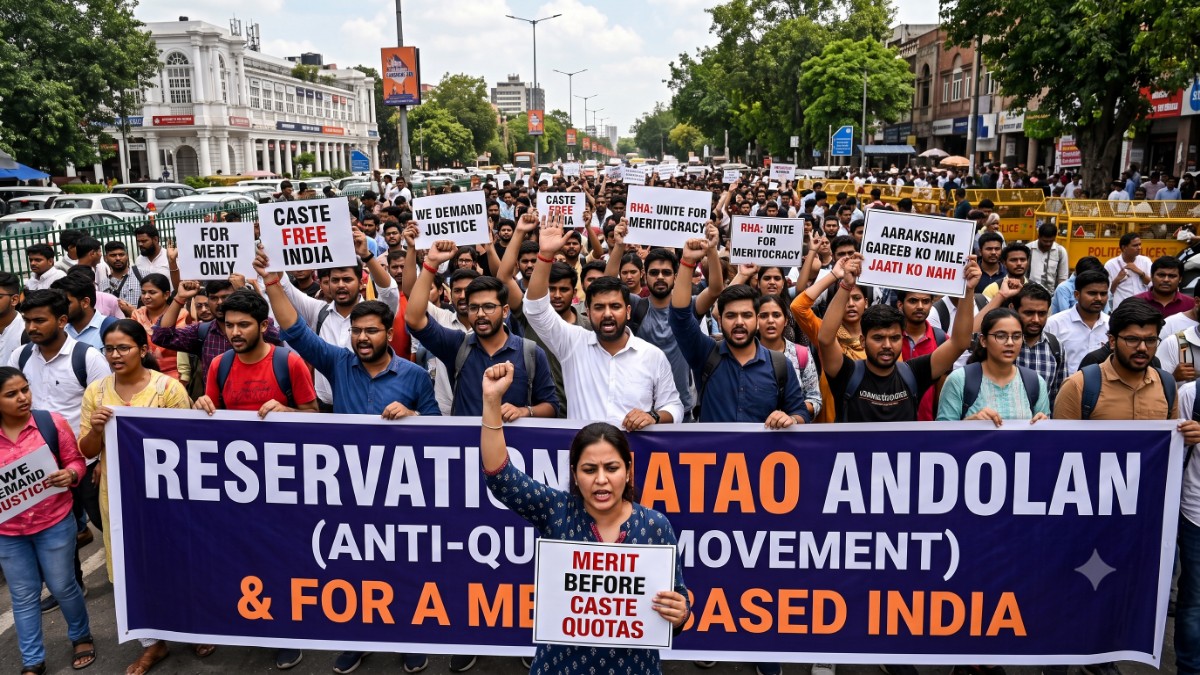
Reservation Hatao Andolan: Why India's Anti-Quota Movement Is Exploding
What started as an online campaign quickly evolved into physical demonstrations in Nagpur, Lucknow, Jaipur..
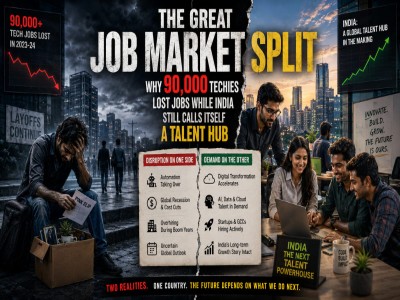
The Great Job Market Split- 90,000 Tech Jobs Lost: Is India Still a Talent Hub?
Why India saw 90,000 tech layoffs and record employability at the same time, and what it means for your career.
Getting A Job In India Just Got Weirder- Fewer Freshers Wanted, But More Jobs Than Ever
Why India's job market is growing overall even as entry-level opportunities shrink, and what skills-first hiring means for freshers.