India Bans Sugar Exports Until September 2026 Here Is What Happened and Why It Matters...
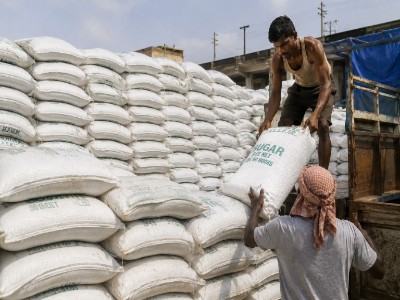
The Indian government on Wednesday banned sugar exports with immediate effect until September 30, 2026, or until further orders. The Ministry of Commerce and Industry announced this through a formal notification that shifted the export status for raw sugar, white sugar, and refined sugar from the "restricted" list to the "prohibited" category.
Written by NBP Desk, New Delhi, Published by Deepak Sriram, 14 May 2026, Thursday, 10:50 PM IST
To put it simply, sugar that was leaving Indian ports and going to other countries has now been stopped. Not slowed down, not reduced, stopped entirely, at least until the end of this sugar marketing season in September.
So why did this happen?
The answer lies in two back-to-back bad years for India's sugar crop. At the start of the 2025-26 season, industry bodies had forecast production of around 31 million tonnes against local demand of 28.5 to 29 million tonnes. However, lower cane yields due to excessive rainfall forced 467 of the 541 mills that began operations this year to shut by the end of March. That is nearly 86 per cent of all operating mills shutting ahead of schedule, a serious sign that things were not going to plan.
The deficit in sugar production was largely due to excessive rainfall in the early stages of growing sugarcane, which caused premature flowering, particularly in Maharashtra and Karnataka. Premature flowering leads to lower sugar recovery rates, and this year was no different. Simply put, the cane grew but did not produce enough sugar from it.
India's sugar production for 2025-26 was revised down by 5.57 per cent to 32.40 million tonnes, with net availability after ethanol diversion standing at 29.3 million tonnes. When you subtract what the country needs for its own consumption, there is very little room left for exports and the government decided that protecting Indian consumers must come first.
Adding to this pressure, domestic sugar prices have been rising steadily, and the rupee hit a record low of 95.75 against the US dollar, adding urgency to measures aimed at stabilising the economy and managing food inflation.
What exactly does the ban cover and what are the exceptions?
The DGFT notification covers raw sugar, white sugar, and refined sugar under ITC HS Codes 1701 14 90 and 1701 99 90, amended from "Restricted" to "Prohibited" with immediate effect.
However, the ban is not a blanket one. Exports to the European Union and the United States will continue under the CXL and Tariff Rate Quota arrangements. Shipments under the Advance Authorisation Scheme will also continue to be governed by the Foreign Trade Policy 2023. Consignments already handed over to customs or custodians and registered in electronic systems with verifiable evidence are also exempt from the immediate ban. So traders who were mid-shipment are not left stranded entirely.
The government also clarified that sugar exports may be permitted to specific countries to address their food security requirements, provided a formal government-to-government request is received.
What happens next?
If the prohibition is not extended beyond September 30, 2026, the export policy will automatically revert to the "Restricted" category. So this is designed as a temporary measure but whether it stays temporary depends entirely on how the next sugarcane crop performs and what the opening stock position looks like heading into 2026-27. The restrictions are expected to tighten global sugar supplies and may support international sugar prices, with analysts suggesting that competing exporters like Brazil and Thailand could benefit by increasing their shipments to markets across Asia and Africa.
For India's domestic market, the immediate effect should be a stabilisation or easing of retail sugar prices over the coming weeks, assuming stocks are managed well by the government. The Food Ministry and DGFT will closely watch the monsoon forecast for Maharashtra, Uttar Pradesh, and Karnataka, the three states that together determine the fate of India's sugar season each year.
In short, this is a government stepping in to protect its own people's access to an everyday essential. Whether the move proves sufficient depends on the rain, the soil, and the harvest that follows.
For feedback, suggestions, or claims regarding published content, please contact us @ deepak@newsbharatpratham.com / newsbharatpratham@gmail.com



Share Your Comments
Related Posts

India's Top 5 Most Popular Pet Food Brands...
Top 5 Pet Food Brands in India (2026) – Best Choices for Dogs & Cats
.jpeg)
From Office to Himalayas: India’s New Endurance Tribe...
Ultra marathons demand next-level strength and mental toughness. Learn how to train smart, fuel right, and stay motivated for the toughest long-distance races.

How to incorporate a company in India...
Company incorporation in India ensures your business gains legal recognition, credibility, and protection. Discover how to register your company with ease and start your entrepreneurial journey the right way.