Modi in the Netherlands- What Changed, Why It Matters, and What India Gets Out of It...
.jpeg)
When Prime Minister Narendra Modi landed in The Hague last Friday, it was not just another diplomatic stopover. By the time he departed for Sweden on Saturday, India and the Netherlands had formally upgraded their relationship to a Strategic Partnership, signed 17 agreements, and laid out a five-year roadmap together. For most Indians, the Netherlands may feel distant, but what happened in those two days has real consequences back home.
Written by Deepak Sharma, New Delhi, Published by Deepak Sriram, 18 May 2026, Saturday, 5:00 PM IST
So, why did this visit happen now? The world has been going through a period of serious economic and geopolitical reshuffling. India and the European Union concluded negotiations for a mutually beneficial Free Trade Agreement in January this year, and both sides agreed that this agreement will strengthen political and economic ties between the world's second and fourth largest economies at a time of rising geopolitical tensions and global economic challenges. Against that backdrop, India needed to lock in strong partnerships within Europe quickly, and the Netherlands, one of Europe's most technology-forward nations, was a natural priority.
The Netherlands is already India's fourth-largest foreign investor, with cumulative foreign direct investment of USD 55.6 billion, and bilateral trade between the two countries stood at USD 27.8 billion in 2024–25. That is a relationship which already runs deep. What changed this week is that both governments decided to give it a formal structure and a long-term direction.Both Prime Ministers recalled that the relationship had built meaningful momentum through India's G20 Presidency in 2023 and the AI Impact Summit held in New Delhi in February 2026, and acknowledged growing convergences between the two countries as the basis for the elevation to a Strategic Partnership.
What exactly was signed?
The 17 agreements cover semiconductors, critical minerals, health, water management, renewable energy, agriculture, and culture, according to India's Ministry of External Affairs. One of the most practically significant is the migration and mobility pact, which is expected to make it easier for Indian professionals and students to travel to and work in the Netherlands. A Letter of Intent on cybersecurity cooperation was also signed, covering closer coordination in multilateral forums and joint efforts to counter cyber threats and cybercrime.
The visit also resulted in the adoption of the India-Netherlands Strategic Partnership Roadmap 2026–2030, a long-term framework covering technology, semiconductors, renewable energy, education, healthcare, water management, agriculture, and critical minerals.
What does India gain practically?
The most tangible area is water. India struggles with recurring floods, drought, and the slow development of its inland waterways, the Netherlands has spent centuries mastering all three problems. Modi visited the Afsluitdijk dam, a 32-kilometre barrier that separates the North Sea from a freshwater lake and has protected the country from catastrophic flooding for decades. Modi stated that India is committed to bringing this modern technology home to assist with irrigation, flood protection, and the expansion of the inland waterway network.
On semiconductors and technology, the partnership carries significant weight. The Netherlands is home to ASML, the only company in the world that makes the extreme ultraviolet lithography machines required to manufacture the most advanced chips. The roadmap focuses on semiconductors, artificial intelligence, quantum computing, and space, alongside a green hydrogen corridor between the two countries.On defence, both sides agreed to work toward a Defence Industrial Roadmap to promote cooperation between defence industries and research centres, and to explore technology collaboration on platforms and equipment between their respective defence ministries.
On the diplomatic side, Dutch Prime Minister Jetten strongly condemned the Pahalgam terrorist attack of April 2025, in which 26 people were killed, and extended his country's support to India in its fight against cross-border terrorism. The Netherlands also reaffirmed its backing for India's bid for a permanent seat on a reformed UN Security Council.After the visit concluded, Modi departed from Schiphol Airport, personally seen off by PM Jetten, and headed to Sweden as part of his ongoing five-nation European tour.
For India, this visit was about more than ceremony. It was about securing a seat at the table of Europe's technology and trade future, on formal, documented terms.


Share Your Comments
Related Posts
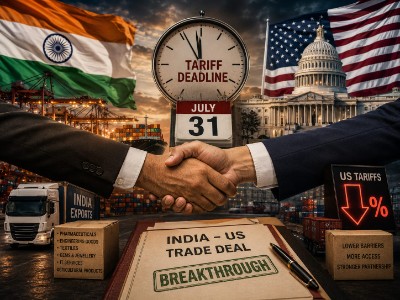
The Deal That Could Change Everything India Exports
The clock ran out, the tariffs arrived, and India still won't sign a bad deal, here's what the collapsed July 24 deadline actually means for your economy.
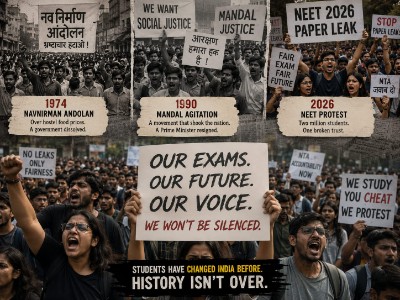
The parents and students India need to talk about...
Not a politician. Not a news anchor. You, the person reading this right now, who probably has a child studying for a competitive exam, or a sibling
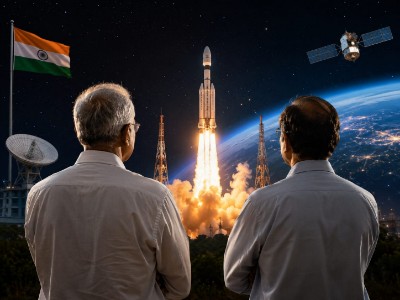
Ex-ISRO scientists rewrote India's space history
Pawan Kumar Chandana and Naga Bharath Daka, Skyroot went from a garage startup to a billion-dollar unicorn in just eight years