Why Bollywood Gets Roasted For What Tollywood And Hollywood Get Away With
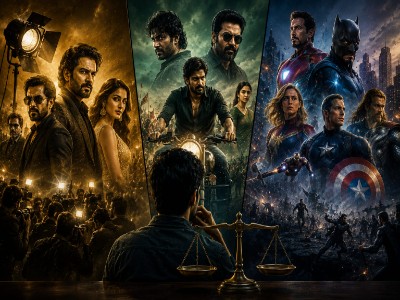
Ask any film Twitter regular about Bollywood's problems, misogyny, glorified violence, toxic masculinity, and you'll get an instant, detailed list. Ask the same person about a Telugu blockbuster or a Hollywood franchise doing the exact same thing, and suddenly the conversation shifts to cinematography, world-building, and "it's just genre filmmaking." This isn't imagination, it's a pattern that keeps repeating across Indian and global cinema criticism, and it's worth actually laying out the receipts.
Written by Tanya Arora (Entertainment and Lifestyle Writer)
The censorship contradiction nobody can explain
Start with India's own Censor Board, the CBFC, which has become something of a case study in inconsistency. When Warner Bros' "Superman" released with a brief, consensual kiss between the leads, the CBFC trimmed it twice, including a climactic mid-air kiss, branding it "overly sensual." Around the same time, the board handed a U/A certificate, meaning even children could technically watch with parental guidance, to films featuring intense graphic violence and openly misogynistic content. Film critic Ramesh Bala pointed out that the inconsistency runs even deeper structurally: different regional teams certify Hindi, Tamil, Telugu, and Marathi films with no uniform standard, so two films with nearly identical content can walk away with wildly different ratings depending on language and industry. One social media user summed up the mood bluntly, joking that the board seemed to treat a consensual on-screen kiss as more dangerous than a graphic assault scene.
When violence gets called "art" versus "corrupting"
Kerala's 2024 hit "Marco" is a genuinely telling example. The film was packed with beheadings, stabbings, and stylised gore, drawing heavy visual inspiration from Hollywood's "John Wick" franchise and Bollywood's own "Animal." Audiences made it a genuine blockbuster, and then turned around and blamed it for corrupting young minds after a real-life crime was linked back to it. As one columnist pointedly asked, why did this particular film get singled out as morally corrosive when equally, if not more, violent films from Hollywood and Bollywood had already been circulating freely without triggering the same panic? The double standard here isn't really about the content itself, it's about which film happens to be in the cultural spotlight when the outrage cycle picks a target.
The Kabir Singh problem, and why nobody said the same about Arjun Reddy first
Perhaps the clearest example of this pattern is "Kabir Singh," the 2019 Bollywood remake of the Telugu hit "Arjun Reddy." Both films feature a deeply controlling, occasionally violent male protagonist whose abusive behaviour toward his girlfriend is framed as intense, tragic love rather than what critics argue it actually is, toxic and controlling behaviour. Yet "Kabir Singh" absorbed a disproportionate share of national outrage, op-eds, panel discussions, and prolonged social media backlash, over a story structure and character arc that had already played out nearly identically in Telugu cinema two years earlier with comparatively muted mainstream criticism. Both films were massive commercial successes regardless, suggesting audiences enjoyed the same content in both languages while critics reserved harsher judgment for the Hindi version.
Even Bollywood's foreign counterparts get a pass on hypocrisy
This pattern isn't confined to violence and censorship either. When American series like "Quantico" or various Hollywood productions leaned on lazy, stereotypical portrayals of Indians, Muslims, or Pakistanis, criticism was often muted or quickly forgotten. But when Bollywood stars stumble into similar territory, endorsing fairness creams while posting solidarity messages during global anti-racism movements, for instance, the backlash has been swift, sustained, and framed specifically around Bollywood's supposed unique hypocrisy, even though the underlying behaviour, saying the right thing publicly while profiting from problematic products, is hardly exclusive to Indian cinema.
Why does this keep happening?
Part of the explanation is genuinely structural rather than purely biased: Bollywood, being India's most visible and commercially dominant film industry, simply gets more scrutiny by sheer volume and cultural centrality, the way Hollywood absorbs outsized global criticism compared to smaller national cinemas. There's also a language and access factor, English-language film criticism, both Indian and international, engages far more deeply and frequently with Hindi cinema than with Telugu, Tamil, or Malayalam films, meaning Tollywood's equally provocative content often escapes the same intensity of English-media discourse simply because fewer critics are actively watching and writing about it in real time.
But structural explanations don't fully excuse the inconsistency either. When the exact same trope, the abusive lover reframed as passionate, the stylised gore reframed as artistic action choreography, draws outrage in one industry's film and admiration in another's, that's worth naming honestly as a double standard, not dismissing as coincidence.
What this means for how we watch and criticize cinema
None of this means Bollywood is above criticism, plenty of the concerns raised about misogyny, glorified violence, and toxic masculinity in Hindi cinema are entirely legitimate and well-documented by researchers. But fair criticism requires consistency. If audiences and critics are going to hold Bollywood accountable for romanticising controlling relationships or glorifying brutal violence, that same standard deserves to travel across language and geography, to Tollywood, Kollywood, and Hollywood alike, rather than being selectively applied whenever Bollywood happens to be the industry currently trending online.

_1200x675.jpeg)

Share Your Comments
Related Posts
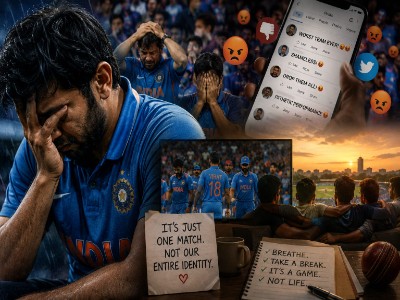
One Bad Day, A Thousand Broken Hearts- Why Indian Fans Need To Chill After A Cricket Loss
Why Indian cricket fans need to remember that sportsmanship means accepting losses with the same passion we celebrate wins.

How Three Indian Champions Turned Grit Into Gold At The Commonwealth Games
The stories behind India's three historic gold medals at the Commonwealth Games 2026 in Glasgow.

Why Bollywood's Most Powerful Union Chose a Studio Over a Star...
When a studio loses a marquee actor from a high-budget project, the financial damage is real reshoots, contract renegotiations, marketing losses, and investor panic. That kind of loss makes very powerful people anngry, very quickly.