Why RBI Is Quietly Fighting To Save Your Rupee
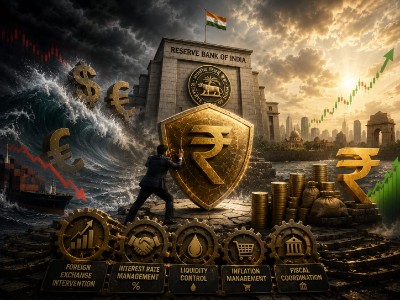
If you've booked a foreign holiday recently, or bought anything imported, you may have noticed prices feeling a little heavier on the pocket. That's not just inflation talking, it's the rupee, and it's been through a rough patch. Right now, the Reserve Bank of India is fighting an almost invisible battle behind the scenes to stop the currency from sliding further, and the story of how and why is genuinely worth understanding.
What's actually happening to the rupee
Over the past year, the rupee has weakened close to 10 percent against the US dollar. It even touched levels near 97 to a dollar before pulling back. As of the last few sessions, it's trading around the mid-90s, having recovered slightly after the RBI stepped in hard. This isn't a one-off wobble, it's the result of several pressures hitting India at the same time.
Why is this happening?
Think of it like this: a currency is only as strong as the demand for it. And several things have been working against the rupee this year.
First, crude oil. India imports the overwhelming majority of the oil it uses, and when tensions flared up in West Asia earlier this year following military strikes that shook the region, oil prices shot up. More expensive oil means Indian companies and the government need more dollars to pay for it, which increases dollar demand and weakens the rupee.
Second, foreign investors got spooked. Between January and May this year, foreign investors pulled around 30 billion dollars out of Indian equity markets, one of the sharpest outflows India has seen. When foreign money leaves, it leaves in dollars, which again pressures the rupee downward.
Third, US bond yields have stayed elevated, making American assets more attractive compared to emerging markets like India. Global money tends to chase the safest, highest-paying option, and right now that option sits in the US, not in Mumbai.
Put all three together costly oil, fleeing foreign capital, and a stronger dollar globally and you get a rupee under genuine pressure.
What has the RBI been doing about it?
This is where it gets interesting. The RBI doesn't just sit back and watch the rupee fall. It actively sells dollars from its foreign exchange reserves to buy back rupees, which supports the currency's value. In April alone, the RBI sold close to 9 billion dollars in the currency market, followed by another 6 billion dollars in May. That's tens of thousands of crores worth of intervention in just two months.
The central bank has also introduced fresh measures to pull in more foreign money through other channels, easing rules for non-resident Indians and overseas investors to buy Indian government bonds, exempting foreign investors from capital gains tax on certain bonds, and offering to bear the hedging costs on deposits from NRIs until September 2026. Essentially, the RBI is trying to open more doors for dollars to flow back into India even as regular equity investors stay cautious.
The results have shown up already. After defending a key level of 97 to the dollar, the rupee posted its biggest single-day gain in around six weeks, helped along by softening crude prices and the central bank's continued dollar sales. India's foreign exchange reserves, meanwhile, remain healthy enough to cover roughly ten months of imports, which gives the RBI enough firepower to keep defending the currency if needed.
What does this mean for you as a reader?
A weaker rupee isn't all bad news, but it does touch your life in ways you might not immediately connect. If you're planning to study abroad, travel overseas, or buy imported gadgets, a weaker rupee makes all of that costlier. On the flip side, it's genuinely good news for exporters, IT companies, pharma firms, and textile exporters earn in dollars and convert to rupees, so a weaker rupee actually boosts their earnings.
There's a bigger economic angle too. The RBI recently trimmed its GDP growth forecast for this financial year from 6.9 percent down to 6.6 percent, citing exactly these headwinds, costly oil, a disrupted monsoon, and a slower global economy. That's still a healthy growth rate by world standards, but it's a signal that policymakers are watching these currency and oil pressures very seriously.
The honest takeaway is this: the rupee's ups and downs aren't just numbers on a screen for currency traders. They ripple into the price of your next phone, your travel budget, and even how much return your mutual funds eventually generate. The RBI's active defense of the rupee, using its reserves and new policy tweaks, shows that India isn't leaving this to chance. But with oil prices and global interest rates still the wildcards, this is a story that's far from over and one worth watching over the coming months.



Share Your Comments
Related Posts
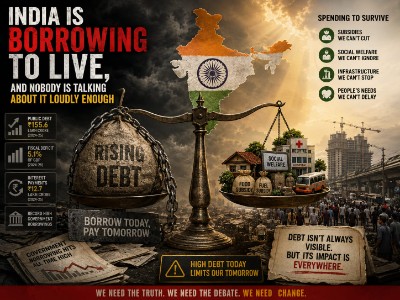
India Is Borrowing to Live, and Nobody Is Talking About It Loudly Enough
India's economy is growing at 7.4 percent, but its households are borrowing to keep up, here's the debt story hiding behind the headline numbers.

The World Stopped Ignoring India- Foreign Policy After 2014
From a country that waited to be invited to one that sets the global agenda, here is how India rewrote its place in the world after 2014.

India Before and After 2014...
From Fragile Five to the world's fastest-growing economy, here is what twelve years of transformation actually look like in numbers.