The World Is Waiting On One Man's Decision And It Could Shake Every Market On Earth
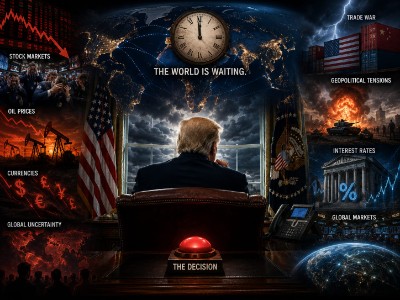
Somewhere in Washington DC, a small group of people just finished a two-day meeting that global markets have been holding their breath over. The US Federal Reserve wrapped up its policy meeting on July 29, and this one mattered more than most, not just because of what they decided on interest rates, but because of who's now running the show and how little anyone can predict him.
Meet the man in charge
Kevin Warsh, the new Fed Chairman, is not a stranger to crisis. He served on the Fed board years ago and was Ben Bernanke's right-hand man during the brutal 2008 financial crash, which earned him serious credibility on Wall Street. But this time around, he's doing something unusual for a central banker: he's deliberately avoiding giving markets clear signals about what comes next. Traditionally, Fed chairs love "forward guidance", hints about future rate moves that help investors plan ahead. Warsh has leaned the other way, preferring less transparency. For markets that thrive on predictability, this has created a genuine sense of unease.
Why this meeting was such a big deal
Three separate fires were burning at once heading into this decision. First, oil prices had spiked nearly 20 percent through July because of on-and-off military conflict between the US and Iran, with real fears about tanker traffic getting disrupted through the Strait of Hormuz, one of the world's most critical oil chokepoints. Higher oil usually means higher inflation, which normally pushes central banks toward raising rates, not cutting them.
Second, despite that oil-driven inflation risk, the American labour market has stayed fairly resilient, giving the Fed room to argue that the economy doesn't need aggressive tightening either.
Third, and perhaps most dramatically, a massive sell-off hit semiconductor stocks worldwide just as the Fed meeting was underway. South Korea's SK Hynix crashed nearly 15 percent in a single session, Samsung Electronics fell over 13 percent, and the panic spread straight into Wall Street, dragging down Nvidia, Intel, and Micron in premarket trading. So the Fed wasn't just deciding on inflation and jobs, it was deciding this against the backdrop of a genuine tech-stock panic rattling global investors.
What actually happened
Going in, the overwhelming market consensus, backed by prediction markets where trading volume touched nearly 50 million dollars, was that the Fed would hold rates steady rather than move in either direction. That's exactly the kind of "wait and watch" stance a central bank takes when it's staring at conflicting signals: inflation risk from oil on one side, and slowing growth risk on the other. Even within the Fed's own committee, members were split almost fifty-fifty on whether rates should go up or down by the end of the year, an unusually divided outlook that shows genuine uncertainty even among the experts making the decision.
Why should any of this matter to someone in India?
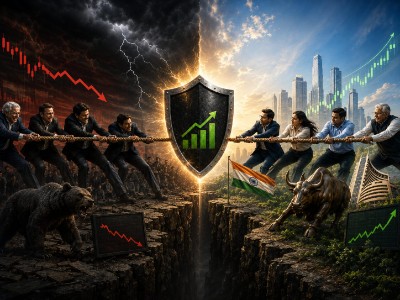
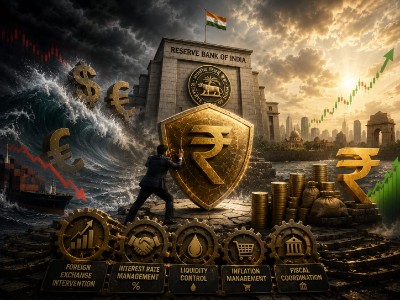
This is where it gets real for Indian readers. When the US Fed moves, or even hints at moving, capital across the entire world reacts, and India is very much plugged into that circuit. If US rates stay high or even inch higher, American bonds keep looking attractive to global investors, and that pulls foreign money away from emerging markets like India, which puts pressure on our stock markets and weakens the rupee further. We're already seeing exactly this play out this year with heavy foreign investor outflows from Indian equities.
There's also the oil angle. India imports the vast majority of its crude, so any escalation in Middle East tensions that pushes oil prices higher directly hits our import bill, our inflation numbers, and ultimately the price you pay at the petrol pump. And the semiconductor sell-off matters too, since it reflects a broader nervousness about the AI-and-tech rally that's powered global markets for the past couple of years; if that story cracks, Indian IT stocks and the broader market sentiment typically feel the ripple effects quickly.
The bigger picture
What this Fed meeting really represents is a moment where the world's most powerful central bank is navigating genuine uncertainty without offering its usual reassurance. Markets don't just want a decision, they want a roadmap, and Warsh's preference for ambiguity means investors everywhere, including in Mumbai and Bengaluru, will keep second-guessing what comes next for months. For ordinary investors, the lesson is simple: expect more volatility ahead, keep an eye on oil prices and US policy signals, and don't be surprised if Indian markets swing sharply on days when Washington, not Dalal Street, is making the headlines.

Share Your Comments
Related Posts
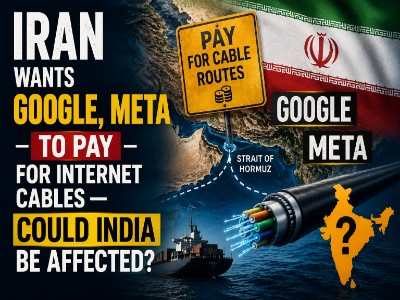
Iran Eyes Google, Meta Cable Fees — India May Feel the Impact...
An Iranian lawmaker, Mostafa Taheri, floated a figure of $15 billion annually as potential fee revenue from these 17 cables crossing the strait. On top of that, Iran has formally established a new body called the Persian Gulf Strait Authority
.jpeg)
Iran Proposes €50 Million Reward for Killing Trump...
The man behind this proposal is Ebrahim Azizi, Chairman of the National Security and Foreign Policy Committee of Iran's Parlia