America's Top Diplomat Visits Mother Teresa's Kolkata — And Then Heads to Delhi With a Full Agenda
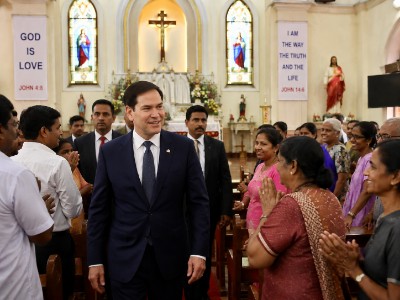
Kolkata woke up to something it had not seen in fourteen years on Saturday morning. The United States Secretary of State, Marco Rubio, stepped off his plane at Netaji Subhash Chandra Bose International Airport, becoming the first person to hold that office to visit the city since Hillary Clinton did so in 2012. But before any diplomacy, before any talks about trade deals or defence pacts, Rubio did something quietly significant, he went to Mother House.
Written and published by Deepak Sriram, Delhi, 24 May 2026, Sunday, 1:35 AM IST
The visit to the Missionaries of Charity headquarters was, according to Sister Concettina, the Secretary General of the congregation, entirely Rubio's own idea. She said, "It was his initiative to come to the Mother House, and it was a joy for us to welcome him because he wanted to receive blessings at Mother's tomb. We prayed together, and that is about all. Nothing else really happened. It was just like a family get-together."
That single statement tells you something important. The most powerful diplomat in America, on his first-ever visit to India, chose to begin not at Rashtrapati Bhavan or South Block, but at a quiet convent on Acharya Jagadish Chandra Bose Road in Kolkata. Rubio visited the Mother House and Nirmala Shishu Bhawan, where the Missionaries of Charity continue to work with vulnerable children, the elderly, and people in need, and he interacted with members of the congregation directly. The Missionaries of Charity was established on October 7, 1950, by Mother Teresa. What began as a small community of 12 members in Calcutta now has over 5,000 members serving in 139 countries across 760 homes, with 244 of those homes in India alone. This is not a small charitable trust. It is one of the most recognised humanitarian organisations on earth, and its heart remains in Kolkata.
Why did this matter enough for Rubio to place it at the very start of a four-day state visit? The answer lies in the optics as much as the personal. Rubio is a Catholic, and Mother Teresa's legacy carries genuine weight for millions of people of faith worldwide. But beyond the personal, it also sent a message, that this visit to India was not purely transactional. It was meant to signal warmth, shared values, and a relationship that goes beyond tariff percentages and defence contracts. And there was plenty of that harder diplomacy to follow. Rubio met Prime Minister Narendra Modi on May 23 itself, with the talks covering trade, technology, defence, QUAD, and several other bilateral matters. The agenda is wide because the issues are real. The visit comes amid growing unease in New Delhi over trade disputes, tariff actions, and questions surrounding long-term US strategic reliability. India had faced steep American tariffs on its exports, which were eventually brought down to 18 per cent after negotiations earlier this year, but the episode left a mark.
Rubio is also scheduled to hold wide-ranging talks with External Affairs Minister S. Jaishankar, and will participate in the QUAD Foreign Ministers Meeting in New Delhi on May 26, which India is hosting. The meeting will bring together the foreign ministers of India, the United States, Australia, and Japan. The QUAD has long been the primary multilateral platform through which these four democracies coordinate their approach to the Indo-Pacific and with China's influence expanding steadily, that coordination matters more now than it did a few years ago.
The US has also indicated it is willing to supply as much energy as India needs, a significant offer at a time when global fuel markets are under pressure due to ongoing tensions around Iran and the Strait of Hormuz. For India, which imports a large share of its crude requirements, a reliable American energy supply line is not a small offer.
So what does all of this mean for the ordinary Indian? It means that two of the world's largest democracies, after a period of friction, are sitting back down at the table seriously. It means more jobs could follow from defence manufacturing deals, technology partnerships could grow, and India's position in global supply chains could strengthen. The QUAD meeting on May 26 will determine just how aligned these four nations really are on the Indo-Pacific question.
But the image that will stay longest from this visit is not a handshake at Hyderabad House. It is a man who holds one of the most powerful offices on earth, standing quietly at the tomb of a woman who had nothing and choosing that as the first thing he did on Indian soil.

Share Your Comments
Related Posts
_400x300_(1).jpeg)
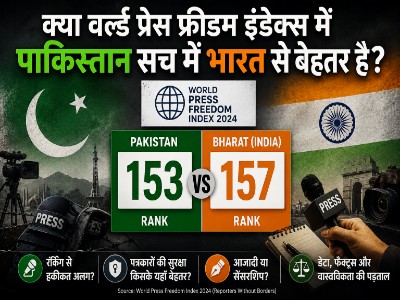
Pakistan Is Happier Than India?
Do you really want to believe that a country facing civil unrest ranks higher than India on an international media or governance index?
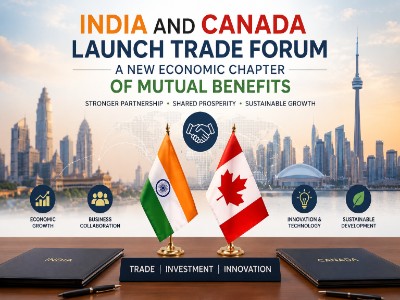
India and Canada Launch Trade Forum — Economic Chapter of mutual Benefits...
The timing is crucial. India and Canada went through a serious diplomatic falling out in 2023, which had nearly finished bilateral trade progress. But the political winds shifted when Canadian Prime Minister Mark Carney took office and visited India in March 2026.

Money Talks: The Top 5 Most Expensive Sports in the World...
Horse racing has been called the sport of kings for centuries, and the finances back that title up completely. Successful stallions can command stud fees of $100,000 to $300,000 per breeding