India Before and After 2014...
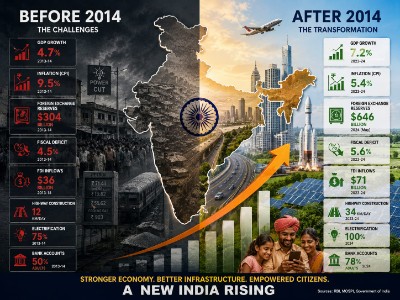
In May 2014, India was being called one of the "Fragile Five" economies, a label assigned by Morgan Stanley to nations with weakening currencies, high inflation, and dangerous current account deficits. The rupee had fallen to its lowest point against the dollar. Gross NPAs in the banking system were climbing toward crisis levels. Infrastructure projects worth lakhs of crore were stuck in regulatory gridlock. And a country of 1.2 billion people was conducting most of its financial transactions in cash, standing in queues outside government offices for documents that took weeks to arrive.
Twelve years later, that country is the world's fastest-growing major economy, processes nearly half of all real-time digital payments on Earth, has 45 UNESCO World Heritage Sites, and launched its first privately built orbital rocket last week.
What happened in between is the story of a transition so rapid that even the people living through it often don't register its full scale until they look back.
The Economic Floor That Had to Be Fixed First
The first priority of the post-2014 government was not glamorous. It was banking sector repair, the kind of unglamorous fiscal plumbing that doesn't make election speeches but determines whether an economy can grow at all.
Gross NPAs in India's banking system declined from 4.4 percent in 2014 to just 1.93 percent in 2026, strengthening credit availability and reducing fiscal stress that had been binding investment since the NPA crisis of the early 2010s. This is not a small number. It represents the removal of a brake that had been slowing Indian business lending for nearly a decade.
Alongside banking repair came direct welfare delivery that actually reached people. Direct benefit transfers worth Rs 51 lakh crore have reached citizens, eliminating leakages that once drained welfare schemes dry, with more than 25 crore people rising out of poverty and over 58 crore beneficiaries reached through the JAM trinity of Jan Dhan, Aadhaar, and Mobile. The Aadhaar-linked direct transfer model, contested in its early years, became the architecture through which Ayushman Bharat health cards reached 44 crore people and cooking gas subsidies reached rural households that had previously depended entirely on firewood.
The Infrastructure Numbers That Require a Second Look
Some of the most striking transformation of the past twelve years is physical and visible to anyone who has traveled across India in the past decade.
The national highway network expanded from 91,000 kilometres in 2014 to nearly 1.5 lakh kilometres in 2026, while airports rose from 74 in 2014 to 164 in 2026 and Metro railway lines expanded dramatically across Indian cities. These are not incremental improvements. They represent a fundamental shift in the pace at which India builds physical infrastructure, compressing into twelve years what might previously have taken three or four decades.
The Atal Setu bridge in Mumbai, the Zoji La tunnel connecting Ladakh through winter, the Chenab Railway Bridge, the world's highest railway arch bridge, the Banaras-Lucknow expressway, the Delhi-Mumbai Industrial Corridor: these are not press release items. They are load-bearing changes to how goods, people, and commerce move across the country.
The Digital Revolution That Changed Daily Life
The most consequential and globally recognised transformation of the past twelve years is not a highway or an airport. It is a payments interface that a vegetable vendor in Jaipur now uses without thinking.
UPI processed nearly 2,300 crore transactions worth Rs 30 lakh crore in March 2026 alone, with India now accounting for 49 percent of global real-time payments. In 2014, India was a cash economy where digital transactions were a privilege of the urban, the banked, and the educated. Today, internet connections have grown fourfold to 103 crore, with 5G covering 99.9 percent of districts.
DigiLocker has issued over 950 crore digital documents to more than 70 crore registered users, while BharatNet has woven optical fibre connections across 2.18 lakh Gram Panchayats, bringing e-governance to places once considered too remote for it to reach.
The international dimension of this achievement is one India still underplays in its own public conversation. By February 2026, India had signed digital public infrastructure cooperation agreements with 24 countries, with platforms like Aadhaar, UPI, CoWIN, and DigiLocker being studied globally as scalable and inclusive models of digital governance. India is not just a consumer of global technology anymore. It is an exporter of governance architecture.
What Remains Genuinely Unfinished
An honest account of twelve years cannot stop at the achievements without acknowledging what the transition left incomplete.
Per capita income growth, the degree of manufacturing depth, and the steady creation of high-quality jobs remain the economy's most unresolved imperatives. India's people are now comparing their outcomes to China's manufacturing path, Southeast Asia's growth, and Gulf prosperity, not to what India used to be. That shift in the benchmark is itself a measure of how far expectations have risen, but it also reflects the gap between headline GDP growth and the lived experience of the urban middle class that increasingly feels the squeeze of inflation against stagnant real wages.
The Production Linked Incentive schemes have produced genuine success in electronics manufacturing, with Apple's India production becoming a globally significant supply chain story. But the deeper manufacturing transformation, the kind that absorbs tens of millions of young Indians entering the workforce annually into quality industrial employment, remains more aspiration than achievement.
The Country That Emerged
In 2014, India was fragile by international financial definition. In 2026, it is the world's fifth largest economy, on track to become the third, processing half the world's real-time payments, building its own orbital rockets through private companies, inscribing its 45th UNESCO World Heritage Site, and leading the global conversation on digital public infrastructure.
The transition was not painless, not complete, and not without legitimate critics on specific decisions and specific failures. But the direction and the distance covered over twelve years is not genuinely in dispute.
The country that stood at the bottom of a Morgan Stanley downgrade list in 2013 is today the country that every major economy is building a trade deal with. That is not just a statistic. That is a transformation.

Share Your Comments
Related Posts
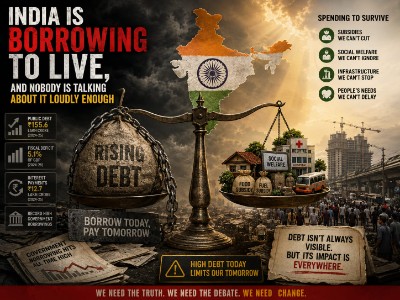
India Is Borrowing to Live, and Nobody Is Talking About It Loudly Enough
India's economy is growing at 7.4 percent, but its households are borrowing to keep up, here's the debt story hiding behind the headline numbers.
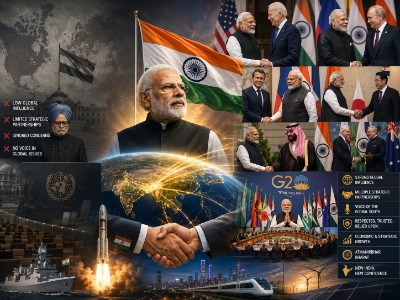
The World Stopped Ignoring India- Foreign Policy After 2014
From a country that waited to be invited to one that sets the global agenda, here is how India rewrote its place in the world after 2014.
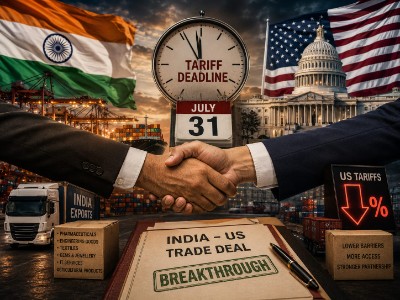
The Deal That Could Change Everything India Exports
The clock ran out, the tariffs arrived, and India still won't sign a bad deal, here's what the collapsed July 24 deadline actually means for your economy.