Same Country, Two Protests, Two Very Different Global Spotlights
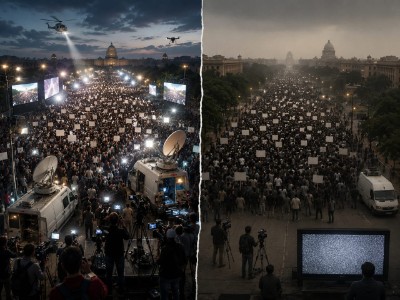
Two youth-led protests. Two very real grievances around institutional failure in India. Yet one dominated headlines in The Economist, Al Jazeera, and CNN for weeks, while the other has barely registered outside Indian domestic news channels. That contrast, between the CJP-led Delhi protests and the ongoing Jharkhand student agitation, has become a genuine talking point, and it's worth examining honestly, without either dismissing it or overselling it as a conspiracy.
The protest that went global: CJP and Jantar Mantar
Back in June 2026, a youth movement calling itself the Cockroach Janta Party, led by Abhijeet Dipke, began protesting at Delhi's Jantar Mantar over alleged irregularities in the NEET-UG examination. What started as anger over a paper leak snowballed into something much bigger once veteran activist Sonam Wangchuk joined and was later forcibly hospitalised during the protest, triggering a massive surge in numbers and visibility. International outlets took notice almost immediately. Al Jazeera published extensive photo and video coverage of police crackdowns on protesters. CNN and France 24 described it as among the largest anti-government demonstrations in India in years. The Economist ran a sharply worded piece questioning the Modi government's handling of the situation. When Union Education Minister Dharmendra Pradhan eventually resigned, global media framed it as a genuine democratic victory for India's youth.
The protest that hasn't: Jharkhand's JPSC and JSSC row
Now compare that to what's been happening in Ranchi since early July. Thousands of students have been protesting for over a month, camped out at Jaipal Singh Munda Stadium, over serious allegations of paper leaks and OMR sheet manipulation in the Jharkhand Public Service Commission and JSSC recruitment exams. This isn't a minor complaint either, it already forced the resignation of the JPSC chairman, drawn CID raids and arrests, and pulled in solidarity from student groups as far away as Punjab and Delhi. Protesters have gone without basic drinking water and toilet facilities for days on end. Yet scanning international coverage turns up essentially nothing from major global outlets. The reporting that exists comes almost entirely from Indian domestic sources, wire services like ANI and IANS, regional channels, and government broadcasters like Akashvani.
Why the gap, honestly?
There are a few genuinely plausible, non-conspiratorial reasons for this. Delhi is India's national capital, and protests there are logistically easier for international bureaus, most of whom are headquartered in Delhi, to cover in person. A protest demanding a federal minister's resignation naturally reads as a bigger national story to a foreign editor than one aimed at a state public service commission, even if the underlying grievance, exam integrity, is nearly identical. Sonam Wangchuk's involvement also brought a recognisable global figure and a dramatic personal storyline, elements that make for compelling international copy in a way an unnamed group of Jharkhand aspirants currently doesn't. And frankly, the Jharkhand protest, while significant, is still evolving and may simply not have crossed whatever internal threshold foreign newsrooms use to greenlight coverage of a domestic Indian story, that threshold could still be met if the agitation escalates further, as protesters have themselves warned it might.
The other side of the argument
That said, the criticism isn't entirely without basis either. Indian outlets aligned with the ruling government, including publications like Organiser, have already accused Western media of selectively amplifying protests that embarrass the Modi government nationally while ignoring comparable grievances when they don't fit that same narrative, or when the state government being protested against, in Jharkhand's case the JMM-led coalition, isn't the BJP. Whether that reflects a deliberate ideological slant or simply the ordinary economics of foreign correspondents having limited bandwidth and gravitating toward stories with a clearer "villain," a bigger stage, and a recognisable face, is genuinely a matter of debate, and reasonable people land differently on it.
What readers should take from this
It's worth being careful here. One protest getting more international attention than another doesn't automatically prove bias, media coverage decisions are shaped by scale, location, timing, political stakes at the national level, and simple newsroom resourcing, not just ideology. But it's equally fair to point out that international media, so quick to frame the CJP protests as a story about India's democratic health, hasn't extended the same lens to Jharkhand, even though the core issue, young Indians losing faith in the fairness of exams that decide their futures, is exactly the same story playing out again. Whether that's an oversight, a resourcing gap, or something more deliberate is something readers can reasonably debate for themselves, but the silence, so far, is hard to ignore.



Share Your Comments
Related Posts
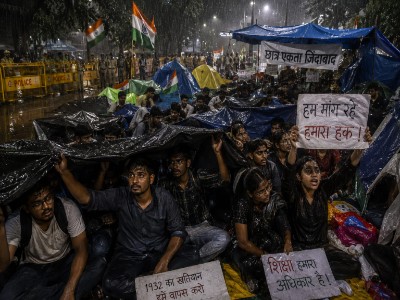
Jharkhand's Students Are Camping In The Rain And Refusing To Back Down...
Thousands of Jharkhand students are protesting in Ranchi over alleged JPSC and JSSC recruitment exam paper leaks.
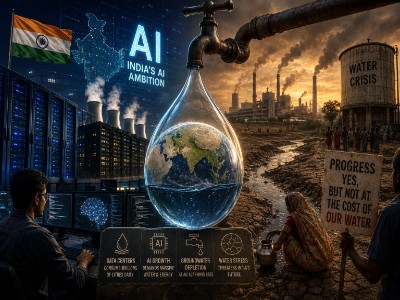
India Wants To Be The World's AI Powerhouse, But At What Cost To Its Water?
How India's aggressive push for AI data centres collides with its own deepening water crisis.

How India's IT Stocks Just Pulled Off Their Best Month In Six Years
Why Indian IT stocks just posted their best month in six years and what it means for your portfolio.