What did the Cockroach Janta Party understand? What did you understand?
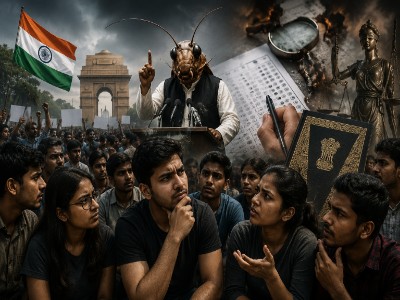
Delhi's Jantar Mantar witnessed a protest filled with slogans, posters, and bold claims. Social media projected it as if India's youth had poured onto the streets in massive numbers. But as soon as the cameras moved away and the noise faded, several questions remained—questions that the protesters themselves must answer.
The story begins with individuals who have long left India but continue to criticize its laws, institutions, and democratic system. In a democracy, questioning the government is a right. Citizens can criticize policies, debate court decisions, and hold leaders accountable. However, those raising questions cannot be exempt from scrutiny themselves.
हिंदी में पढ़ें: कॉकरोच जनता पार्टी क्या समझी - क्या समझे आप
Public demonstrations at Jantar Mantar operate under legal conditions, including limits on time, space, and conduct. If protesters refuse to follow those rules while simultaneously invoking the Constitution and the rule of law, it naturally raises questions. Many observers wondered whether this was a principled stand or a selective use of constitutional values.
A recurring image during the protest was that of Dr. B.R. Ambedkar. Though, Ambedkar was not merely a symbol; he was one of the architects of the Indian Constitution. If one claims faith in the Constitution, should that faith not extend to its procedures and institutions as well? Otherwise, critics may ask whether constitutional symbols are being used for conviction or convenience.
The debate also extended to calls for removing an elected government. In a democracy, governments are changed through elections, not slogans. Many of the voices leading such demands had previously campaigned for political groups that failed at the ballot box. Political preferences are legitimate, but presenting partisan positions as the sole voice of the people invites scrutiny.
NEET paper leak controversy
At the center of the protest was the NEET paper leak controversy—a serious issue affecting the future of millions of students. Public anger was relevant, and accountability was necessary. Yet some questioned whether demanding the Education Minister's resignation was the only solution. If arrests had been made, investigations were underway, and courts were hearing cases, was the answer to reject the entire system or to push for its improvement?
Whether Dharmendra Pradhan resigns or not, he should be removed from the ministerial post and sent back to the party organization during this cabinet reshuffle.
His tenure as Petroleum Minister did not live up to expectations, and his performance as Education Minister cannot be considered particularly impressive either. At the same time, there is no doubt about his abilities as an organizational leader. Whether in Odisha or West Bengal, he has played an important role in strengthening the party organization.
Youth participation in CJP protest
Another question concerned youth participation. How many young people actually joined the movement, and how long did they remain engaged? Indian youth can be angry with a government, and they have every right to be. But many argue that India's youth understand the difference between opposing a government and opposing the nation itself.
As they say, no nation is perfect—it becomes better only when its citizens work to improve it ( Koi bhi desh perfect nahi hota, hume use perfect banaane ke liye kaam krna pdta hae)
." India's youth not only critics; they build. They launch startups, create solutions, and contribute to society rather than merely complain about it.
Just to draw a comparison, many point to the farmers' movement, where participants remained on the ground through winter, summer, and monsoon.
.png)
.png)
The strength of a movement, they argue, is measured not by social media reels but by real ground work.
Slogan of Azadi
The protest also revived the familiar slogan of "Azadi." Critics questioned whether every movement must rely on the same slogan and the same old controversies. Do young Indians not have new ideas and new language to express their aspirations?
Several international outlets, particularly Al Jazeera, highlighted the protest. However, failed to explain, how strong the movement actually was, how long it lasted, or the fact that many Indian youths had begun questioning the claims and intentions of Cockroach Janta Party itself.
The final question is about the future. Will new faces or agendas continue trying to influence India's youth? Probably. That is part of democratic life. But the larger question is how India's youth will respond.
Their answer will be simple: they want reform, not chaos; accountability, not destruction; change, not the weakening of India. India's youth know how to protest, but they also know how to build. And they understand that Koi bhi desh perfect nahi hota, hume use perfect banaane ke liye kaam krna pdta hae (no nation is perfect—it becomes better only when its citizens work to improve it.)

_1200x675.jpeg)

Share Your Comments
Related Posts
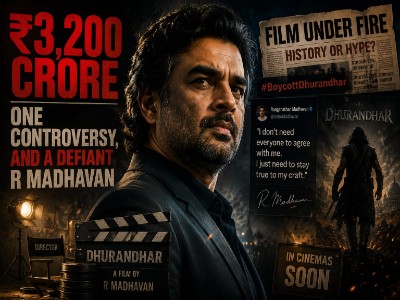
Rs 3200 Crore-One Controversy And A Defiant R Madhavan
How "Dhurandhar" became Bollywood's biggest franchise of 2026, sparking record box office numbers, a propaganda debate, and a fresh controversy.
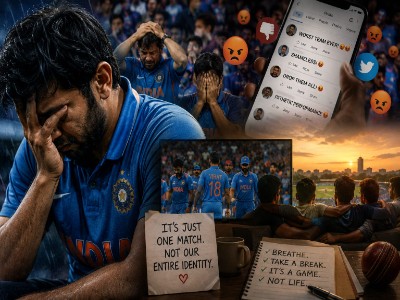
One Bad Day, A Thousand Broken Hearts- Why Indian Fans Need To Chill After A Cricket Loss
Why Indian cricket fans need to remember that sportsmanship means accepting losses with the same passion we celebrate wins.

How Three Indian Champions Turned Grit Into Gold At The Commonwealth Games
The stories behind India's three historic gold medals at the Commonwealth Games 2026 in Glasgow.